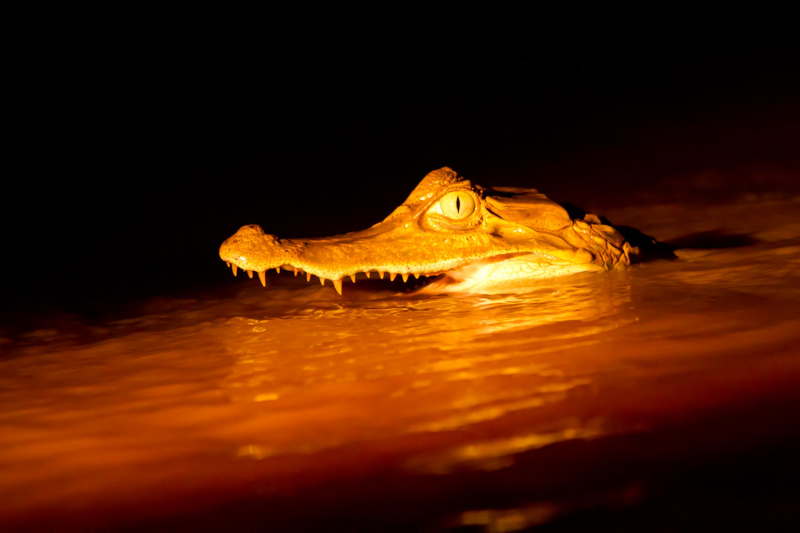
You’re in a canoe. It’s late. The water looks like black tea, smooth and quiet. Your guide sweeps a flashlight across the lake—and two red pinpoints shine back. Not a drone. Not a reflection. Eyes.
That moment is why people come all the way to southeastern Peru. Tambopata doesn’t “do” subtle. It’s a place where amazon rainforest wildlife shows up like it owns the calendar: macaws at dawn, monkeys overhead, and—after dark—the heavyweight in the water. The amazon rainforest black caiman.
This post is a friendly field guide for spotting the black caiman in Tambopata, without turning your trip into a stress audit. We’ll keep it practical, a little nerdy, and very human.
First, meet the “Amazon river boss”
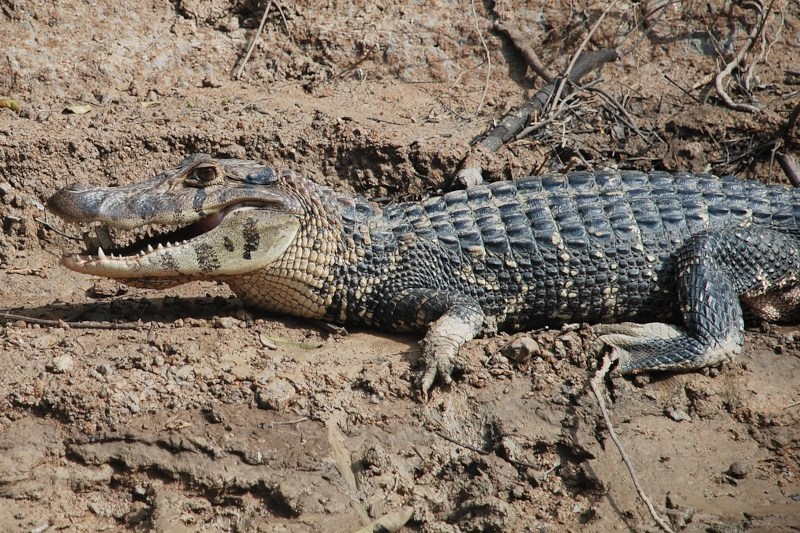
The black caiman’s real name is Melanosuchus niger. If you like tidy categories, think “alligator relative,” not “classic crocodile.” If you like vibes, think “ancient tank with eyelids.”
Here are a few black caiman facts that land fast:
- Size: Big adults can reach around 4–5 meters (roughly 13–16 feet). Not all do, but the species has that ceiling.
- Color: Dark gray to almost black—perfect for shadowy water.
- Role: Top predator in many waterways. That’s not hype; it shapes the whole system.
And yes, if you’re typing black caiman amazon rainforest into your search bar right now, Tambopata is one of the places where that query turns into a real, blinking animal.
Caiman vs crocodile (the quick, non-snobby version)
People love this question because it feels like a trivia flex. But it’s also useful in the field.
In a simple caiman vs crocodile comparison:
- Family: Caimans are in the alligator family group; crocodiles are their own family line.
- Snout: Many caimans have broader, more U-shaped snouts (not always, but often).
- Teeth look: Crocodiles tend to show more “toothy grin” when the mouth is closed.
Here’s the honest twist: in low light, at a distance, with your heart thumping a bit, you mostly use context. Where are you? Freshwater lake? Slow river? How big is it? That’s why guides are gold—they’ve built pattern recognition the way office folks build spreadsheets.
Why Tambopata is such a good place to see them
Tambopata has a mix of protected lakes, river corridors, and intact forest. Translation: food, cover, and less human pressure. Add strict rules in some areas (like no motorboats on certain lakes), and you get calmer wildlife behavior. Calmer behavior means longer sightings. Longer sightings mean better photos and better memories. It’s a nice little chain reaction.
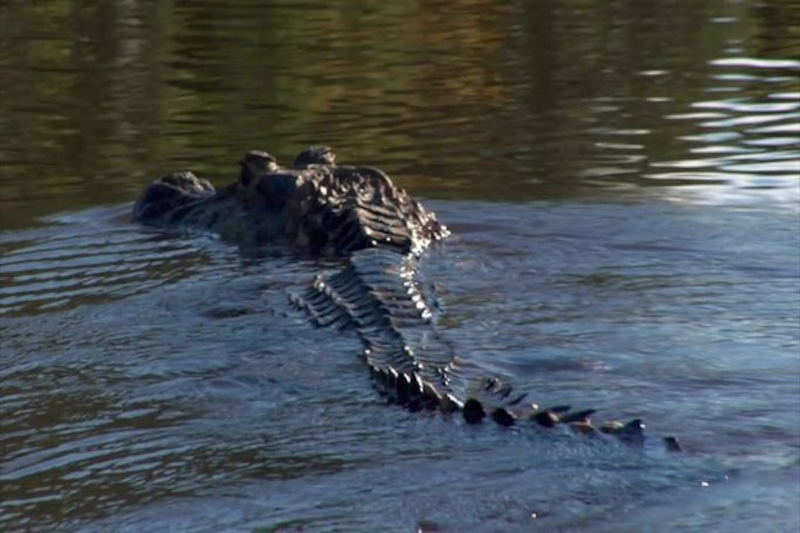
Also, oxbow lakes here are basically high-performance habitat. They’re quiet, rich in fish, and full of edges—those soft banks where a caiman can sit still like a floating log with a secret.
Okay, so where exactly should you look?
Let’s keep this grounded. The best viewing usually happens on:
1) Oxbow lakes (your highest-probability play)
Lake Sandoval is the famous name, and for good reason. It’s accessible from Puerto Maldonado, it’s scenic, and it can produce night sightings that feel unreal. Because motorized boats are restricted, you move quietly. Quiet travel changes everything.
Other lakes—often reached through lodges and guided routes—can be less crowded and just as strong. Names and access can shift with seasons and permits, so treat this like project planning: the “scope” is the lake network, not one single pin on a map.
2) Slow river edges (good, but more variable)
Along the Madre de Dios and connected waterways, you’ll sometimes spot caimans near banks, especially where the current slows. These sightings can be quick. Or you’ll get lucky and watch one hold position like it’s doing quality control on the river.
Night safaris: the show starts after dinner
Most black caiman viewing happens at night. That’s when their eyeshine is easy to pick up, and when they’re more active. It’s also when the rainforest feels like a different department of the same company—same building, totally new soundtrack.
What it’s like: you sit low in a canoe or small boat, you hear frogs and insects working overtime, and you watch your guide scan. The beam catches eyes. Red dots. Sometimes two feet away, sometimes fifty.
A small digression, because it matters: if you’ve ever used a headlamp on a camping trip and caught a cat’s eyes reflecting back, it’s the same basic idea. Many animals have a reflective layer in the eye that bounces light. With caimans, it’s dramatic. And slightly spooky. In a good way.
How to be safe without killing the vibe
You don’t need to be afraid, but you do need to be sensible. Think “risk management,” jungle edition.
- Stay seated: Boats tip. The water is not your friend at night.
- Hands in the boat: Keep them inside. No trailing fingers.
- Listen to the guide: They’re running the operation. You’re the client.
- Respect distance: Close is exciting; too close is disruptive (and sometimes dangerous).
Are black caimans dangerous to humans? They can be. They’re big predators with powerful jaws. But attacks on visitors during guided outings are rare, and good guides avoid risky setups. Most problems come from solo swimming, poor judgment, or people treating wild places like theme parks. Don’t do that, and you’ll be fine.
Spotting the “other caiman” (and why it’s still fun)
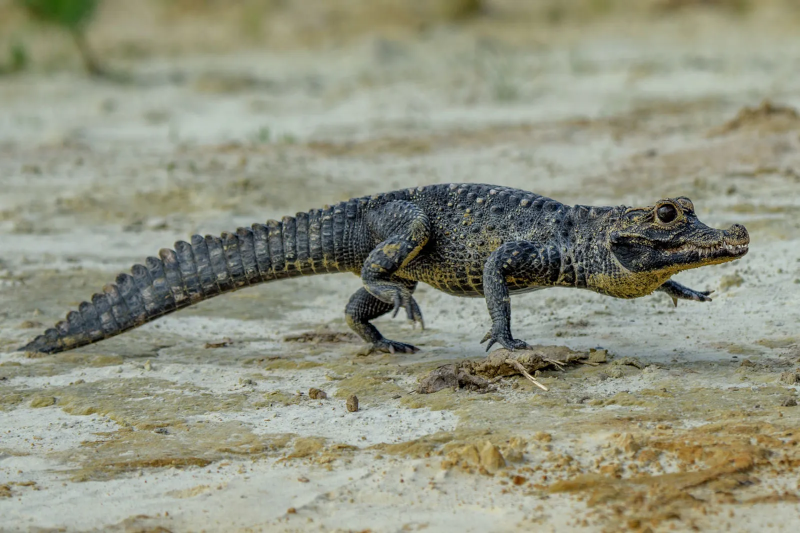
Tambopata is also home to smaller caimans, like the spectacled caiman. This is where people sometimes feel a tiny letdown—until they actually watch one hunt. Then it clicks: small doesn’t mean boring.
How to tell them apart, fast:
- Size: Spectacled caimans are usually much smaller than an adult black caiman.
- Face detail: The spectacled caiman often shows a ridge between the eyes—like a bony “bridge.”
- Overall vibe: Black caimans look heavier, darker, and more “built.”
And here’s the mild contradiction: sometimes you want to start with the smaller species. It tunes your eyes. It’s like warming up before a big presentation. Once you can spot one caiman cleanly, you’ll spot the big one faster—if it’s there.
What do black caimans eat? (It’s a lot.)
Young caimans start small—think insects and little fish. Adults level up. Fish, turtles, birds, and mammals that come too close to the edge. Capybaras are on the menu in some places. So are other predators, sometimes. That’s part of why black caimans matter: they keep the whole system from tipping too far in one direction.
Professionally speaking, they’re a “keystone” style player. Remove the top controller, and your downstream metrics—fish populations, aquatic vegetation, even water quality signals—can shift. It’s not always instant, and it’s not always obvious. But it’s real.
Conservation: the part that makes the sighting hit harder
It’s easy to romanticize the rainforest. Then you learn history, and the romance gets sharper around the edges.
Black caimans were heavily hunted for leather in the 20th century. Numbers dropped hard in many areas. Protected places, enforcement, and community-led tourism have helped some populations recover. Seeing one in Tambopata can feel thrilling—and a bit relieving—because it hints that protection can work when it’s funded and taken seriously.
If you like practical ways to support that: choose lodges and guides that are licensed, pay fair wages, and follow local rules. Your money is a vote, even on vacation. It’s not the whole solution, but it’s not nothing.
When to go (and what to pack, realistically)
Many travelers aim for the drier months (often May through October). River levels tend to drop, beaches and banks show up, and wildlife can be easier to find. The trade-off is dustier trails and cooler nights. It’s not freezing, but you might want a light layer.
Packing notes—short, because no one wants a novel about socks:
- Insect repellent: Something effective. Many people use DEET or picaridin; pick what works for you.
- Long sleeves: Light fabric, loose fit.
- Binoculars: Even a compact pair changes your trip.
- Phone setup: Download offline maps, bring a power bank, and keep things dry.
And a small, modern-travel tangent: if you use iNaturalist or eBird, Tambopata is a candy store. Logging sightings can be fun, and it’s also useful data for researchers. Casual hobby, real value. That’s a rare combo.
So… will you actually see one?
Maybe. Wildlife doesn’t do appointments. But Tambopata gives you strong odds because the habitat is right and the guiding culture is solid. If you do see a black caiman, it probably won’t be a long, cinematic stare-down. It might be a slow glide. A head that barely breaks the surface. Eyes that blink once, then vanish.
And honestly? That’s perfect. It feels like the rainforest saying, “You can visit, but you don’t run the place.”
If your goal is clear—black caiman amazon rainforest sightings with minimal chaos—build your itinerary around oxbow lakes, go out at night with a reputable guide, and keep your expectations flexible. Flexible, but focused. Like any good trip plan.
Tambopata will handle the rest.

