Macaws and parrots are some of the most colorful and eye-catching birds in the world. Many people admire them because they are smart, social, and can copy human words. Even though they may look similar, macaws and parrots are not the same. In this article, we’ll explain how they differ, explore their special features, and look at why they are important in places like the Amazon Rainforest.
Parrots belong to a large group of birds called Psittaciformes. There are about 393 species of parrots around the world, living mostly in warm tropical and subtropical areas. Parrots are easy to recognize by their curved beaks, strong legs, and special feet with two toes pointing forward and two pointing backward. These features help them climb, hold food, and move easily through trees.
Parrot Species and Habitats
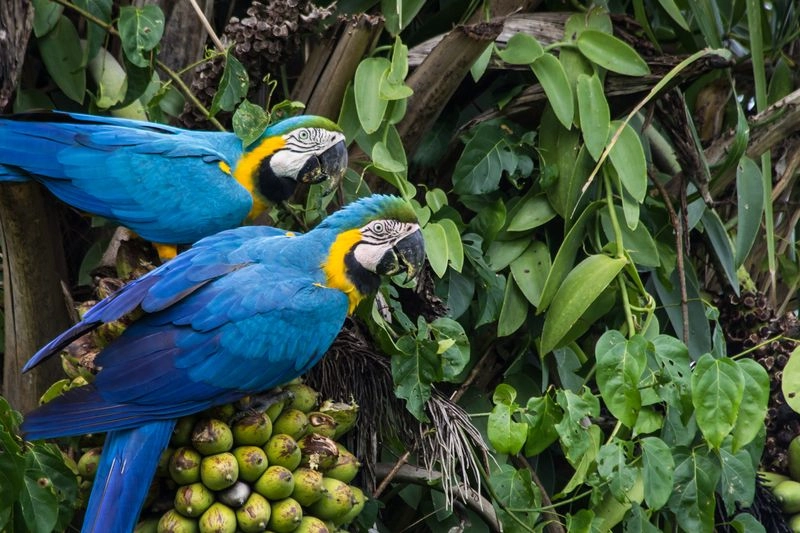
Parrots come in many shapes and sizes. Some are tiny, like the budgerigar, while others—such as the African grey parrot—are much larger and known for their intelligence. They live in a wide range of places, including rainforests, dry grasslands, and mountains. In the Amazon Rainforest, you can often see colorful parrots like the green-winged macaw and the blue-and-yellow macaw. Each species has adapted to its environment in its own way.
Adaptations to Diverse Ecosystems
Parrots survive well in many types of environments. In rainforests, their bright feathers help them blend into the colorful plants around them. In dry areas, their strong beaks let them break open hard seeds and nuts, which are common foods for them in those regions. Parrots that live in the mountains have strong flying skills, helping them travel across steep landscapes to find food.
Role in Local Biodiversity
Parrots are very important for keeping ecosystems healthy. When they eat fruits and seeds, they spread seeds across the forest. This helps new plants grow and supports many other animals. Because parrots are sensitive to changes in their environment, their presence often means the ecosystem is in good condition.
Parrot Conservation in Different Regions
Parrot conservation needs differ from place to place. Some parrot species face threats from habitat loss, illegal wildlife trade, and climate change. Conservation groups work to protect their habitats, stop poaching, and teach local communities why parrots matter. These efforts help people live in harmony with wildlife while keeping parrot populations safe.
Parrot Lifespan and Behavior
Parrots are known for living a long time. Some species, like the African grey parrot, can live up to 60 years in captivity, and sometimes even longer. In the wild, their lifespan can be shorter because of threats like habitat loss and predators, including harpy eagles.
Parrots are very social and usually live in flocks. They communicate using different sounds and are famous for their ability to copy noises, including human words.
Longevity and Its Implications
Because parrots live for many years, caring for one is a long-term commitment. Pet owners must be ready to provide proper food, attention, and medical care for decades. In conservation, knowing how long parrots live helps experts plan long-term programs to protect wild populations and make sure their efforts work over time.
Social Structures and Communication
Parrots have complex social lives. They form strong bonds with other flock members and use a mix of sounds and body language to share information about food, danger, and their place in the group. Their social nature also makes them very interactive pets, able to create strong connections with their human caregivers.
The Cognitive Abilities of Parrots
Parrots are among the smartest birds in the world. They can solve problems, use simple tools, and learn many words and phrases. Research shows that some species, like the African grey, have thinking skills similar to those of a young child. Because of this intelligence, parrots need mental activities and stimulation, both in the wild and in captivity, to stay healthy and active.
Exploring Macaws
Macaws are a distinct group within the parrot family, known for their large size, long tails, and exceptionally bright colors. There are about 17 species of macaws, many of which live in Central and South America, especially throughout the Amazon Rainforest. Their vibrant appearance and lively behavior have made macaws powerful symbols of tropical forests and key species in global conservation efforts.
Macaw Distinctive Features
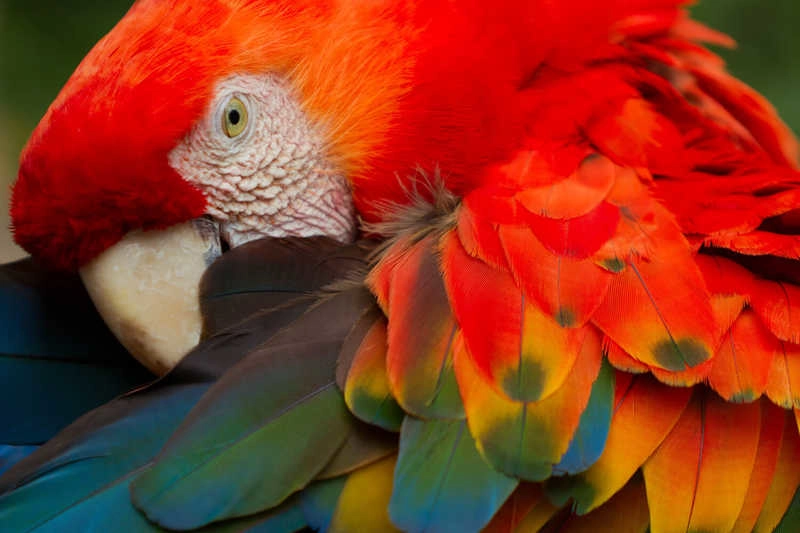
Macaws are easily recognized by their bold coloration and strong beaks. Their large, curved beaks allow them to crack open tough nuts and seeds, which form a major part of their diet. Another remarkable feature is the unique pattern of facial feathers each macaw has—much like a human fingerprint. This distinct pattern helps researchers identify individual birds, supporting long-term studies and conservation programs. These traits not only help macaws survive but also contribute to their captivating presence.
Vibrant Plumage and Its Purpose
A macaw’s colorful feathers do more than attract attention. In the rainforest canopy, their bright hues help them blend into patches of light and shadow, offering effective camouflage. Plumage also plays an important role in social interactions. Certain color displays and body movements are used during courtship, communication, and to establish dominance within their flocks.
Beak Strength and Dietary Habits
One of the macaw’s most impressive adaptations is its powerful beak, strong enough to crack even the hardest nuts. This ability allows them to access food sources that many other animals cannot, giving them an advantage in the forest. Their diet includes fruits, seeds, nuts, and occasionally clay from riverbanks, which helps neutralize natural toxins found in some seeds. To find food, macaws use their excellent eyesight and their agile, grasping feet, which allow them to climb and handle food with precision.
Individual Identification through Facial Patterns
Each macaw’s facial feather pattern is unique, allowing scientists to identify and monitor individuals over time. This is especially useful in the Amazon Rainforest, which is home to several iconic species, including the scarlet macaw and the hyacinth macaw—the largest parrot in the world. These birds play important ecological roles, especially as seed dispersers. By carrying seeds across long distances, they help regenerate the forest and maintain plant diversity. Their survival reflects the Amazon’s extraordinary biodiversity and the fragile balance that supports life in this vast ecosystem.
Macaws in the Amazon
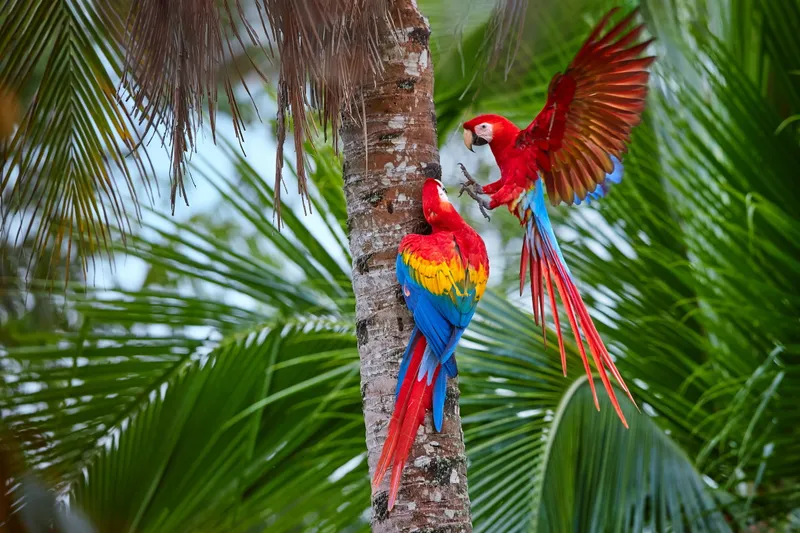
The Amazon Rainforest is home to several macaw species, including the scarlet macaw and the hyacinth macaw—the largest parrot in the world. These birds play an important role in the forest by spreading seeds across large areas. Their actions help new plants grow and support the forest’s natural regeneration. The presence of macaws reflects the Amazon’s rich biodiversity and the complex connections that hold the ecosystem together.
Ecological Importance of Macaws
Macaws are vital to the Amazon’s ecological balance. As they eat fruits and drop seeds throughout the forest, they encourage plant growth and help maintain plant diversity. This benefits many other animals that rely on these plants for food, shelter, and survival. Through their daily movements, macaws help keep the rainforest healthy and resilient.
Threats to Macaw Populations
Although macaws are essential to the ecosystem, they face many dangers. Deforestation destroys their habitats. Illegal trapping for the pet trade reduces their numbers in the wild. Climate change also affects their food sources and nesting areas. These threats make conservation efforts urgent. Protecting their habitat, enforcing wildlife laws, and educating the public are key steps to ensure their survival.
Conservation Success Stories
There have been inspiring conservation successes. One example is the recovery of the blue-throated macaw in Bolivia. Conservationists protected its habitat, created captive breeding programs, and worked closely with local communities. These combined efforts helped the species increase in number and move closer to long-term stability. Such success stories serve as models for protecting other macaw species and their environments.
Clay Licks: A Vital Resource
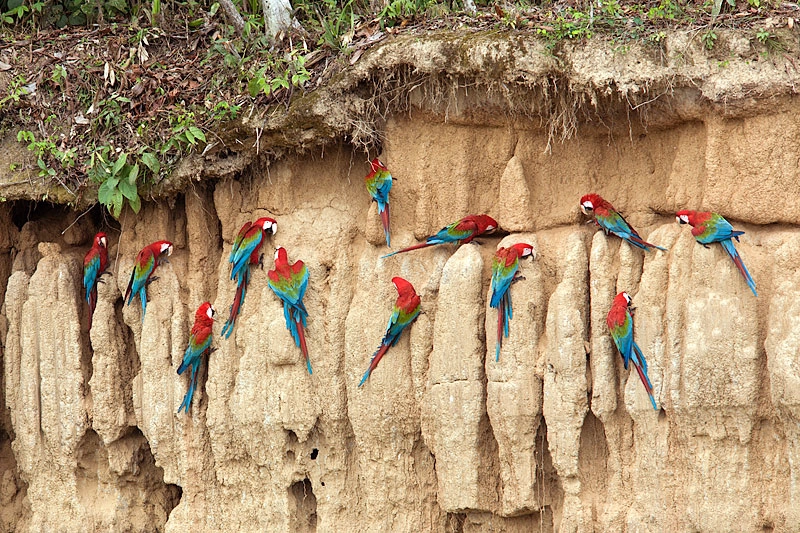
One of the most interesting behaviors seen in macaws and other parrots is their visit to clay licks, also called collpas. These are natural walls of clay where birds gather to eat small amounts of soil. Scientists believe the clay helps neutralize toxins found in seeds and unripe fruits. Clay licks are common in places like Tambopata National Reserve and the Manu National Reserve, where many visitors come to watch this unique activity.
Nutritional Benefits of Clay Consumption
Clay provides minerals that are sometimes missing from the birds’ normal diet. It also contains compounds that can bind to toxins, reducing their harmful effects. This helps the birds digest their food more safely and stay healthy. Clay eating is a smart natural adaptation that helps parrots survive in areas with limited food choices.
Toxin Neutralization and Health Benefits
Many seeds and unripe fruits contain chemicals that can be poisonous. When macaws eat clay, the minerals attach to these toxins and make them safer to digest. This allows the birds to eat a wider range of foods. It also helps them get enough nutrients during times when food is scarce. This behavior is essential for their survival in the rainforest.
Social Dynamics at Clay Licks
Clay licks are also busy social spots. Large groups of macaws and parrots gather there every morning. These meetings give birds a chance to interact, choose mates, and share information about food and potential dangers. Watching these groups helps scientists learn more about parrot behavior and communication.
Clay Licks and Ecotourism
Clay licks attract birdwatchers and nature lovers from all over the world. This tourism provides income for local communities and encourages the protection of natural areas. When managed responsibly, ecotourism helps conserve wildlife while also supporting local economies.
Conservation Efforts
Macaws and parrots face many dangers. Their habitats are destroyed by deforestation. Many birds are trapped illegally for the pet trade. Climate change also affects their food and nesting areas. These problems make conservation work urgent and necessary.
Community Involvement
In many parts of the Amazon, local communities help protect these birds. They monitor nests, collect data, and guide tourists. They also support sustainable tourism that brings income while protecting nature. Their involvement is key to long-term conservation.
Education and Awareness Programs
Education plays an important role in conservation. Programs in schools and community centers teach people about the importance of parrots and macaws. These programs encourage future generations to care for the environment and protect local wildlife.
Sustainable Livelihood Initiatives
Conservation projects often help local families find income sources that do not harm the rainforest. These include ecotourism, sustainable farming, and traditional crafts. By reducing pressure on wildlife, these projects support both community well-being and conservation goals.
Collaborative Conservation Partnerships
Effective conservation requires teamwork. Governments, NGOs, scientists, and local communities must work together. By combining resources and knowledge, they can address major threats like habitat loss and illegal trade more effectively.
Birdwatching as a Conservation Tool
Birdwatching brings money into local economies. Visitors pay for guides, lodging, food, and transportation. This economic boost helps entire communities and encourages them to protect local wildlife.

Citizen Science Contributions
Many birdwatchers record their sightings and share them with researchers. This “citizen science” provides valuable information about bird populations. It helps scientists track changes and evaluate conservation efforts.
Promoting a Conservation Ethic
Birdwatching also inspires people to care about nature. Seeing these birds up close encourages visitors to support conservation projects and protect habitats.
The Role of Protected Areas
Protected areas like the Tambopata National Reserve offer safe habitats for macaws, parrots, and many other animals. These areas protect forests from logging, farming, and development. They help maintain healthy ecosystems and preserve biodiversity hotspots.
Importance of Habitat Protection
Protected areas keep key habitats safe from deforestation, farming, mining, and urban growth. These areas protect the natural landscapes that wildlife depends on. By preserving these environments, they help ensure the survival of many plant and animal species, including macaws and parrots. Protecting habitats is one of the most important steps in stopping species decline.
Challenges in Protected Area Management
Managing protected areas is not easy. Funding is often limited, enforcement is difficult, and conflicts can arise with nearby communities. Solving these problems requires creative solutions and teamwork. Conservation plans must also be flexible so they can adapt to new threats and changing conditions.
Enhancing Connectivity Between Protected Areas
Connecting protected areas is essential for healthy wildlife populations. Corridors allow animals to move, find food, and maintain genetic diversity. Reducing habitat fragmentation strengthens ecosystems and supports long-term species survival. This is especially important for macaws, which need large territories to live and breed.
Community-Based Management Approaches
Including local communities in protected-area management creates stronger conservation results. When residents help make decisions, they feel a sense of ownership and responsibility. This leads to strategies that are culturally respectful and more effective. By aligning conservation with local needs, these approaches improve long-term success.
Conclusion
Macaws and parrots are remarkable birds with unique traits that make them essential to the Amazon Rainforest. Understanding their differences and ecological roles helps guide effective conservation. By supporting protection efforts and choosing sustainable practices, we can help ensure these species survive for generations. Their future depends on our shared commitment to caring for the natural world.

