Floors. That is the best way to picture it. The Peruvian Amazon runs in vertical layers like a building nobody designed but everything moved into anyway. Raptors at the top. Monkeys in the middle. River predators below. None of them cross between layers much. Each band is its own world running parallel to the others.
Ecotourism peru exists inside that system, not adjacent to it. The money stays with the communities whose land creates the buffer that keeps extraction out. Species density here per hectare beats almost every other measured place on the planet. That number is not marketing. It is what field researchers keep finding every time they count.
Peru ecotourism is not a park visit. Managed circuits exist elsewhere. What draws people here is contact with ecosystems that have not been simplified for foot traffic. The canopy holds a measurable share of global oxygen. That gives forest protection a value that tourism revenue alone cannot fully capture. Ecotourism in Peru through community operations ties those two things together. One funds the other. Both need the other to survive.
Animals here do not existperu as individual species. Every layer connects to every other through predation, seed dispersal, pollination, decomposition. Pull one thread and the effects travel. The timeline for visible damage runs in decades. By the time it shows, the reversal window has usually closed.
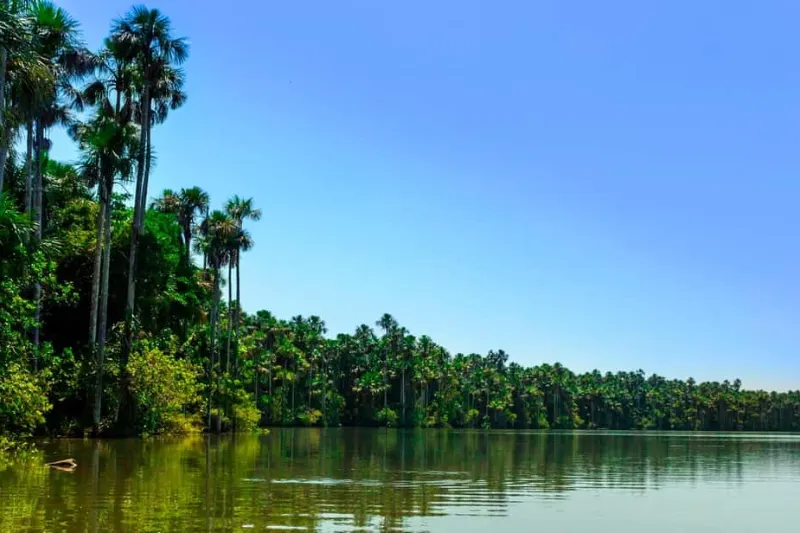
Manu vs. Tambopata: Finding Your Perfect Balance of Adventure and Accessibility
Same country. Same starting city. After Puerto Maldonado the two reserves diverge completely.
Tambopata by river takes a few hours from the airport. Manu takes days. Overland driving first, then river travel, then more river travel before anything resembling primary forest appears. That travel gap filters most visitors before wildlife preferences even enter the conversation.
Under a week available? Tambopata. The clay lick runs every morning without fail. Macaws on the riverbank wall before 7 AM is not a lucky sighting. It is a daily event built into the schedule. Lodges are real lodges. Transit is predictable.
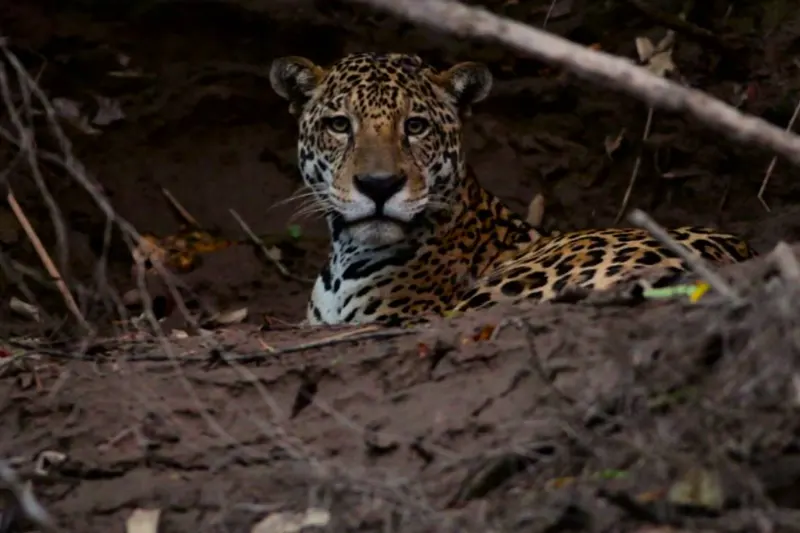
More time, higher tolerance for rough conditions, specific interest in cats? Manu. Jaguar probability in the reserved zone is not comparable to Tambopata. It is genuinely higher in ways that matter for anyone who has that specific goal. That combination makes it the right destination for adventure ecotourism. Sandoval lake within Tambopata is worth knowing about separately. Oxbow lake. Giant river otters, black caimans, dense aquatic bird activity. Canoe access only, which keeps the approach quiet enough for the encounters to last.
Numbers:
- Tambopata: 2 to 4 hours by boat, reliable clay lick, established lodges.
- Manu: 1 to 2 full travel days, better jaguar odds, research stations and basic camps.
How Community-Led Tours in Madre de Dios Turn Tourism into Conservation
Hiring local staff is not the same as community ownership. That distinction matters the moment illegal gold mining starts pushing into a river corridor.
Communities with collective territory rights can respond legally and physically. An outside operator working out of a Cusco office cannot do that regardless of how long they have run tours in the area. When extraction pressure targets a specific stretch of river, presence and legal standing are what determine the outcome.
Indigenous tribes in Madre de Dios were managing these territories long before any tourism infrastructure appeared. Seasonal flood patterns, animal movement corridors, plant relationships that took generations to map. That knowledge is what certified guide programs draw from. Hire from within those communities and the knowledge transfers directly into the visitor experience. Bring in outside naturalists with field guides and it does not.
What are some examples of ecotourism in peru that actually produce conservation results? Community lodges in Madre de Dios funding territory patrols, local clinics, village schools from tourism revenue. That is the documented model. Money that stays inside reinvests into the same territory. The loop closes. Resort-style operations where profit leaves the region do not produce that outcome regardless of how the marketing frames it.
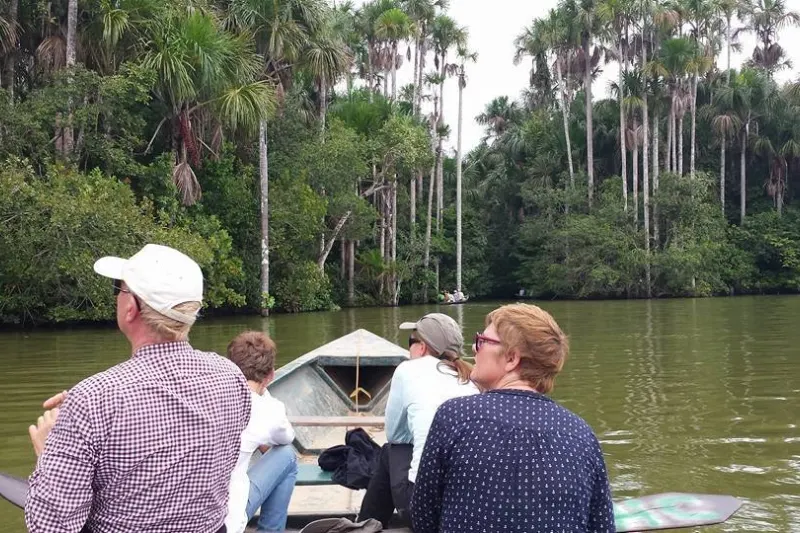
Spotting the Elusive: Why Macaw Clay Licks and Night Walks Define the Amazon Experience
Macaws vs parrots. Worth understanding before standing at the clay lick wondering what the guide is pointing at. Both groups use the same riverbank walls. Different reasons, different sizes, different cycling patterns. Macaws eat harder seeds, higher toxin loads, need more mineral supplementation per session. Parrot species move faster, arrive in higher numbers, cycle through quicker. One morning produces both. Knowing which is which changes what you are actually watching.
Wildlife tours peru schedule around two windows and nothing else really matters outside them:
- 5 AM: monkeys in the canopy, parrots at the riverbank, prey animals crossing open ground.
- 6 PM: caimans entering the water, movement starting along river edges.
Hummingbirds are in the low canopy right after sunrise along the river edge. Several Amazonian species appear in that exact window while everyone is still watching the clay lick. Guides who know them identify by flight pattern without binoculars. Easy to miss. Worth asking about before the morning starts.
Night walks run after dark on the same trails the daytime ani Frog species mals vacated hours earlier. are among the most consistent sightings and also the most useful ecological read. Amphibian diversity indicates water quality, microclimate stability and canopy health. A trail with consistent frog activity is running through intact habitat. One without telling you something.
Snakes. Less frequent than most people expect but present enough that the preparation matters. Venomous species move at ground level after dark. Rubber boots, exact footprint discipline behind the guide. Those two things cover most of the actual risk. Ecotourism peru operators enforce no-contact rules from the trailhead regardless of species or apparent threat level.
Spotting Real Sustainability: How to Verify an Eco-Lodge Before You Book
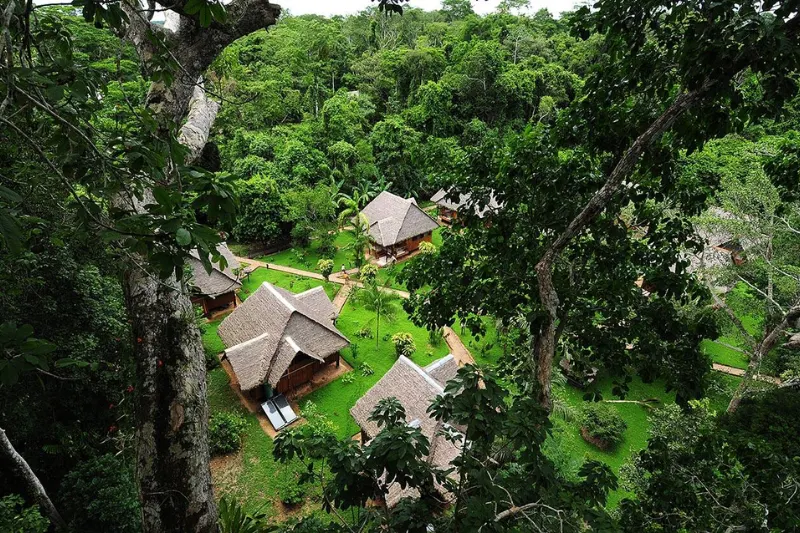
Concrete foundations versus raised wooden stilts. That one construction detail is visible on arrival and separates genuine practice from brochure language faster than any certification. Stilts keep soil nutrient cycles intact. They maintain ground-level wildlife corridors. Concrete does neither. The choice was made before the first guest arrived and it cannot be undone.
Solar panels and greywater filtration cost money to maintain in a remote rainforest location. Their presence means someone made a financial commitment to practice rather than presentation. That matters.
Five questions before booking anything:
- Guides hired from local indigenous communities directly?
- Greywater filtration and disposal method on site?
- Percentage of energy from renewable sources?
- Do profits fund local conservation or education?
- Enforced wildlife observation distance?
Three red flags that show up consistently across the sector: captive animal photo opportunities, diesel-only generators, fully foreign staff. One of those is worth a question. All three together means look elsewhere immediately.
The Pacaya Samiria Expedition: Why the Flooded Forest is the Amazon’s Best Kept Secret
Northern Peru. Seasonal flooding raises river levels thirty feet. The forest floor goes completely underwater for months. Tree canopies drop to the waterline. Boat routes pass through land that was walkable weeks before. Tannins from decomposing leaves darken the water until it reflects like a mirror across the flooded channels.
Routes shift every rainy season. Certified local guides are not a recommendation here. They are the only way through.
Native cacao grows along flooded forest margins in Pacaya Samiria. Several community operations have built cacao income alongside tourism revenue specifically to reduce dependence on visitor numbers. Wild pod to fermented bean, visitors can follow the full process at community stops along the river. Income diversification makes the conservation model hold when tourism slows. Single-income conservation models do not hold.
Pink river dolphins. Unfused neck vertebrae allow head rotation that ocean dolphins cannot manage. They use that range of motion to hunt fish through submerged root systems in dark water where echolocation is the only navigation tool. No feeding. No baiting. Quiet motors reduce underwater noise that would disrupt that system. The equipment choice has a conservation mechanism behind it, not just a comfort rationale.
Your Role as a Forest Guardian: Making the Impact Last Beyond the Canopy
Community reserves funded through ecotourism peru blocked deforestation across millions of hectares over the past decade. Conservation tracking records document that. The outcome compounds when visitor choices favor community-owned operations consistently across multiple years, not just a single trip.
Three post-trip actions with actual documented impact:
- Carbon offsets in verified programs funding indigenous land conservation.
- FSC-certified wood and deforestation-free coffee purchasing.
- Recurring donations to NGOs building alternative incomes inside rainforest communities.
Images of wild animals shared online remove demand from the captive wildlife photo industry running at the margins of legitimate tourism. Directing other travelers toward community-owned operations multiplies what a single visit started. The conservation outcome of one trip extends significantly when the next traveler makes the same choice because of it.

