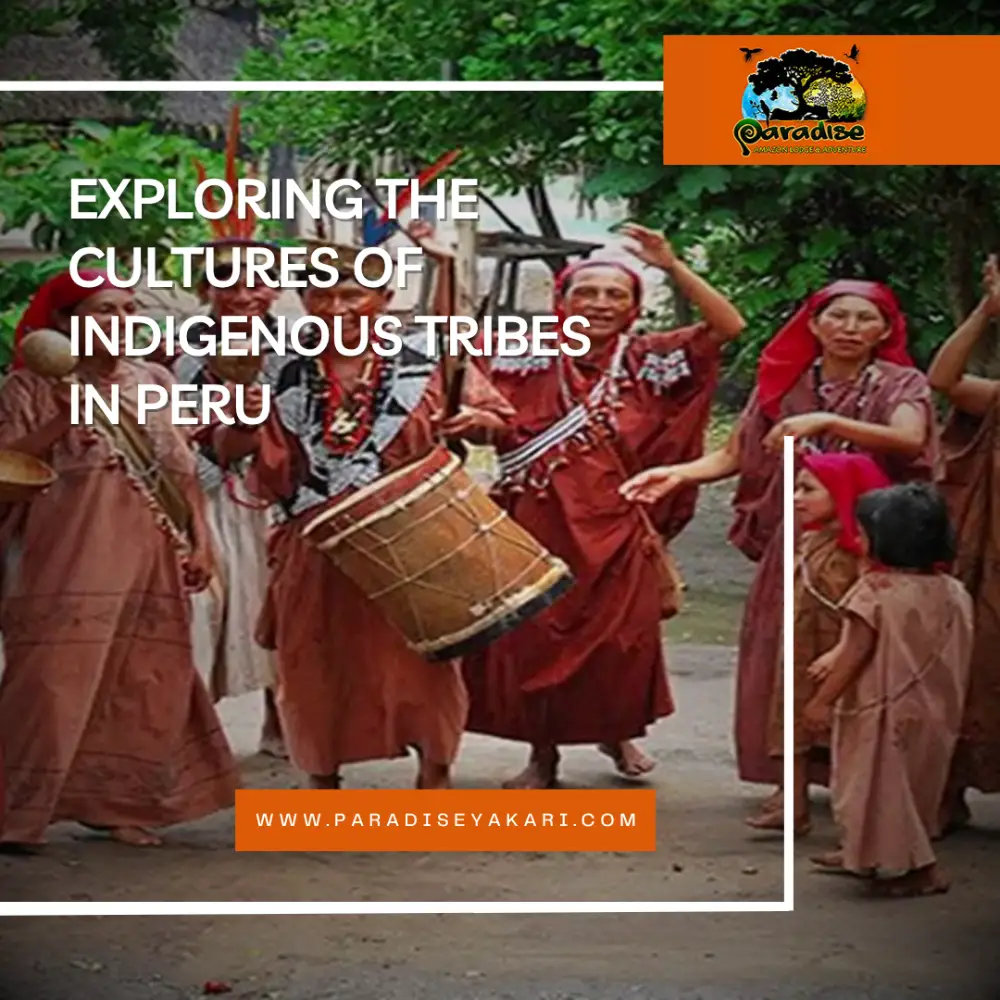
Machu Picchu gets most of the attention and most people assume indigenous culture here is something that ended with the Inca Empire. It did not. The Peruvian indigenous tribes that exist today are functioning societies navigating the twenty-first century, not museum exhibits or historical footnotes, that distinction matters before visiting any community or buying anything from a market stall.
Peru has 55 recognized ethnic groups and 48 distinct languages still spoken today. The Ministry of Culture classifies the country as megadiverse, which is a bureaucratic word for something genuinely difficult to wrap a head around. Shrinking the entire cultural range of Europe into one country gets close to the right image. The native tribes peru offers access to are as distinct from each other as French is from Finnish.
Geography splits this diversity into two broad categories. Highland Andean communities and lowland Amazonian peoples live in different ecosystems, face different pressures and have developed different ways of handling both. Peru’s indigenous peoples stretch across both zones and the differences between them are as significant as the similarities.
Why the Quechua and Aymara are More Than Just Builders of Empires
The Andes look too harsh for consistent farming and Quechua communities have been proving that wrong for centuries. Andenes, the massive stair-like terraces carved into steep mountainsides, are still in use. They prevent soil erosion and create micro-climates that work as a low-tech response to modern climate change without requiring anything invented after the fifteenth century.
The Aymara live further south around Lake Titicaca and are frequently lumped in with Quechua communities by people who have not looked closely. They speak a completely separate language. They organize land through self-governing collective groups rather than the centralized structure the Inca Empire used.
Both groups communicate identity and history through textile patterns. A weaver encoding local symbols into fabric is not making decoration. The symbols carry specific meaning depending on origin:
- Quechua rivers: Wavy continuous designs representing waterways essential to valley agriculture.
- Aymara stars: Geometric stars used as planting calendars across the high plains.
- The shared condor: Quechua weavers connect it to the heavens, Aymara variations emphasize ancestral protection.
Cusco sits at the center of Quechua cultural identity and markets throughout the city sell textiles where these symbols appear, though verifying authenticity before buying matters considerably.
Survival in Madre de Dios: How the Ese Eja People Guard the Rainforest
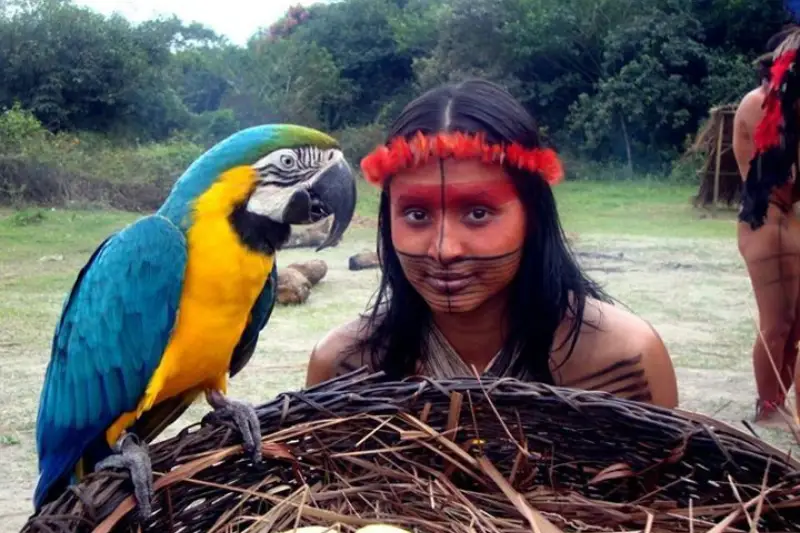
The Madre de Dios region sits at the eastern edge of Peru and illegal gold mining has been tearing through it for decades. The Ese Eja people have navigated the Tambopata river for generations, living alongside an ecosystem that provides food, medicine, and spiritual foundation simultaneously. Their relationship with that territory is not sentimental. It is functional and irreplaceable.
Ancestral territoriality is the framework here. Indigenous identity is inseparable from the specific forest the community inhabits. When outside operators move in to extract resources, the damage is not just environmental. It erases a living system of knowledge and practice that cannot be reconstructed after the fact.
The community of Palma Real developed a practical response. Partnerships with conservationists produced sustainable tourism initiatives that generate income while indigenous guides monitor the territory for illegal activity. That model funds legal land defense rather than waiting for outside institutions to provide it.
Protecting the amazon rainforest requires empowering the people who already know it. That principle applies consistently across every community discussed further down this page.

The Ashaninka Legacy: Lessons in Resilience and Forest Defense
The Ashaninka are one of the largest Peruvian indigenous tribes in the Amazon and their history of direct defense goes back centuries. Spanish conquest triggered a protective instinct that carried forward into the late twentieth century when the Shining Path invaded their forests. Self-defense committees organized community patrols that actively repelled the violence. That capacity for organized resistance did not disappear after the conflict ended.
Today the same energy goes into communal land titling. The process is roughly equivalent to getting a single property deed for an entire town where land is collectively owned. The government requires extensive bureaucratic mapping before granting those titles and the Ashaninka have become some of the most effective advocates for indigenous rights peru has produced through that process.
Native cacao grown under forest canopy alongside organic coffee generates income for Ashaninka cooperatives without requiring a single tree to come down. That combination of legal advocacy and sustainable agriculture is the model other peruvian amazon communities reference when building their own economic strategies.
Decoding the Kené: How Shipibo-Conibo Art Maps the Spiritual World
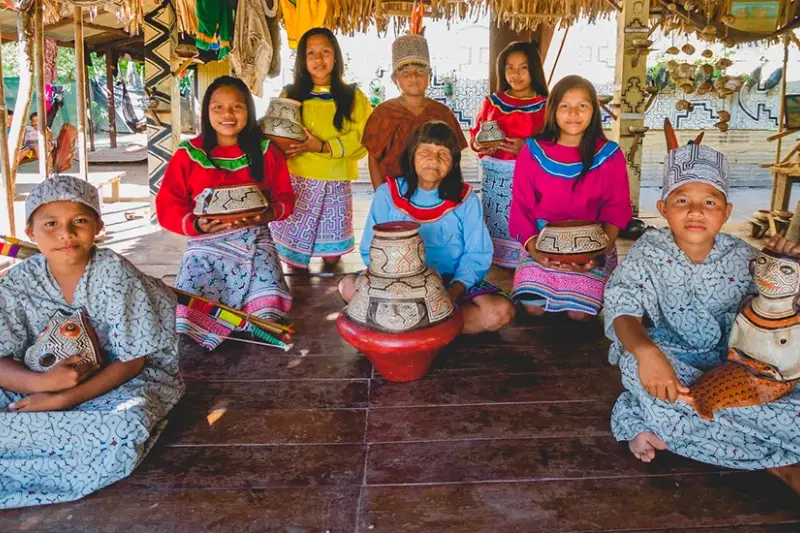
The Shipibo-Conibo live along the Ucayali River and are among the most recognizable of the amazonian indigenous groups because of Kené, the intricate geometric patterns painted on textiles, faces, and pottery. These are not decorative. They map the energetic flow of the rainforest, tracing invisible pathways of rivers, stars, and plant life in visual form.
Kené connects directly to healing practice. A healer conducting a ceremony traces the patterns mentally and translates them into icaros, sacred healing songs. The song and the pattern reference the same information through different forms. Ayahuasca ceremonies are closely tied to this tradition, using plant-based preparations to access healing states that the Shipibo-Conibo have documented and refined across generations.
Natural amazon remedies derived from rainforest plants sit at the center of that knowledge system. Long before modern laboratories identified the same compounds, these communities had already mapped their medicinal applications in practice. Protecting that knowledge requires respecting indigenous autonomy across the country.
The Right to be Left Alone: Protecting Peru’s Uncontacted Mashco Piro
Some communities chose isolation not from ignorance but from a calculated reading of what contact has historically produced. The Mashco Piro in the Madre de Dios region are officially recognized by the government as PIACI, Peoples in Isolation and Initial Contact. That classification exists because the alternative has proven catastrophic in documented cases elsewhere.
Three reasons isolation functions as a survival strategy:
- Historical memory: Generational knowledge of enslavement during the nineteenth-century rubber boom informs current decisions about contact.
- Biological vulnerability: Immunological exposure to a common cold brought by an outside visitor can kill entire communities.
- Cultural sovereignty: Isolation guarantees self-determination and prevents forced assimilation without requiring any legal argument.
The government established protected territorial corridors specifically for these communities. Those zones function as legal shields against trespassers. By existing undisturbed within those habitats the Mashco Piro inadvertently protect millions of acres of rainforest from industrial development simply by being there.
Illegal loggers and poachers continue pushing into those zones. Defending the borders is not a policy discussion for these communities. It is a literal matter of survival.
The Invisible Cost of Gold: Standing Up for Indigenous Land Rights
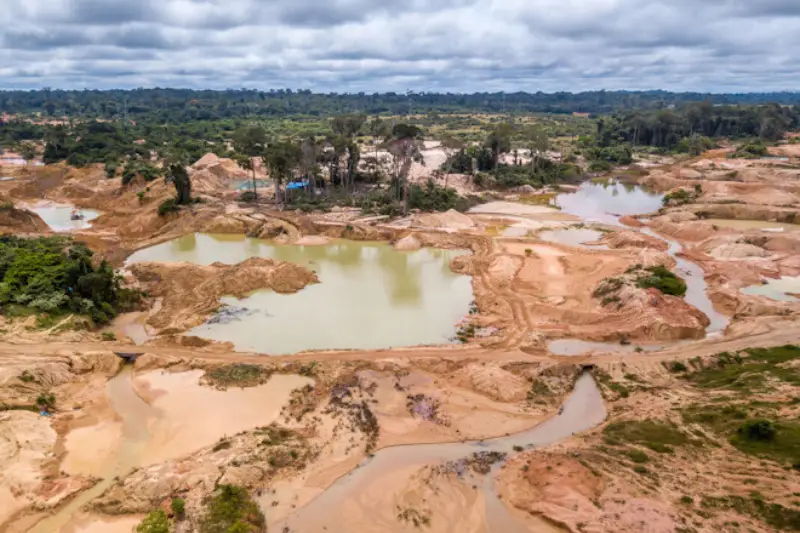
Contacted communities face a different set of pressures. Illegal mining operations use mercury to separate gold from river mud and that mercury enters the water supply. It builds up in fish, which are the primary protein source for riverside families. The health consequences accumulate over years in ways that are difficult to reverse once the contamination is established.
The Amazon river in peru and its tributaries serve as the primary highway, food source, and cultural backbone for dozens of communities along its banks. Mining contamination does not stay in one location. It moves downstream through the same water systems that entire communities depend on for daily survival.
Land titling is the central legal challenge for native tribes peru wide. Indigenous territory does not come with the same clear property lines as urban real estate and the titling process is slow and tangled in bureaucracy. Without formal documents communities have almost no legal standing when operators move in and start extracting. GPS devices, smartphones, and satellite maps now support indigenous patrols monitoring deforestation in real time. Indigenous rights peru depends on that kind of on-the-ground documentation as much as it depends on courtroom advocacy.
How to Support Indigenous Communities Without Leaving a Footprint
Peru is not just the land of the Incas. The peruvian indigenous tribes active today shape the country’s present as much as its past and the distinction between a respectful visitor and an extractive one matters to the communities being visited. That difference starts with where money goes and who controls the experience.
Peruvian amazon dances performed during community tourism events are one of the clearest windows into living cultural practice available to outside visitors. Watching them in the context of an indigenous-run program is a different experience from seeing the same dances performed at a hotel show in the city. Context determines whether the experience supports the community or simply borrows from it.
Community-based tourism initiatives run by indigenous operators keep economic benefit inside the community rather than passing through outside intermediaries. When buying textiles, verifying fair-trade certification and direct artisan sourcing prevents money from flowing to mass production operations that copy indigenous designs without compensation.
Practical checklist for visiting remote communities:
- Ask before photographing individuals, daily activities, or homes.
- Book directly with indigenous-owned guiding services.
- Leave no trace in the ecosystems surrounding ancestral lands.
- Support organizations that advocate for tribal sovereignty rather than distributing unstructured handouts.
The amazonian indigenous groups and Andean communities described throughout this page are not relics. They are active stewards of environments that global biodiversity depends on. Every informed choice made when interacting with their territories or their products contributes to whether those communities continue to have the conditions they need to function.