The Amazon Rainforest is one of the most biodiverse places on Earth. It’s home to thousands of species, many of which can’t be found anywhere else. In this article, we’ll explore some of the fascinating animals that live in this lush, green paradise and discuss the importance of wildlife conservation.
The Amazon Rainforest is not just a home for countless species; it’s also a vital part of the global ecosystem. It produces 20% of the world’s oxygen and acts as a major carbon sink, absorbing carbon dioxide from the atmosphere. This helps to mitigate climate change. Protecting the Amazon is crucial for maintaining biodiversity and keeping our planet healthy.
The Amazon Rainforest and Its Critical Role in the Global Climate
The Amazon Rainforest is often referred to as the “lungs of the Earth” due to its massive contribution to oxygen production. Trees and plants undergo photosynthesis, a process that not only absorbs carbon dioxide but also releases oxygen. This continuous cycle is essential for maintaining breathable air on a global scale. Without the Amazon, the balance of oxygen could be severely disrupted, affecting all life forms.
The Amazon acts as a massive carbon sink, sequestering large amounts of carbon dioxide from the atmosphere. This natural process plays a significant role in regulating global temperatures and combating climate change. The vast forest absorbs more carbon than it releases, offsetting a portion of the human-induced emissions. Any disturbance to this balance, such as deforestation, can lead to increased carbon levels and global warming.
A Biodiversity Hotspot in the Heart of the Tropics
The Amazon is a biodiversity hotspot, teeming with an incredible variety of life forms. It supports not just animals and plants but also fungi and microorganisms, each playing a unique role in the ecosystem. This rich biodiversity contributes to ecological stability and resilience, allowing the rainforest to recover from natural disturbances. Protecting this diversity is key to ensuring the survival of countless species and the overall health of the planet.
Mammals in the Amazon Rainforest are as diverse as they are fascinating. They range from large predators to small, elusive creatures, each adapted to thrive in their unique habitats. Let’s delve into the lives of some remarkable mammals inhabiting this lush environment.
Jaguars: Apex Predators of the Amazon
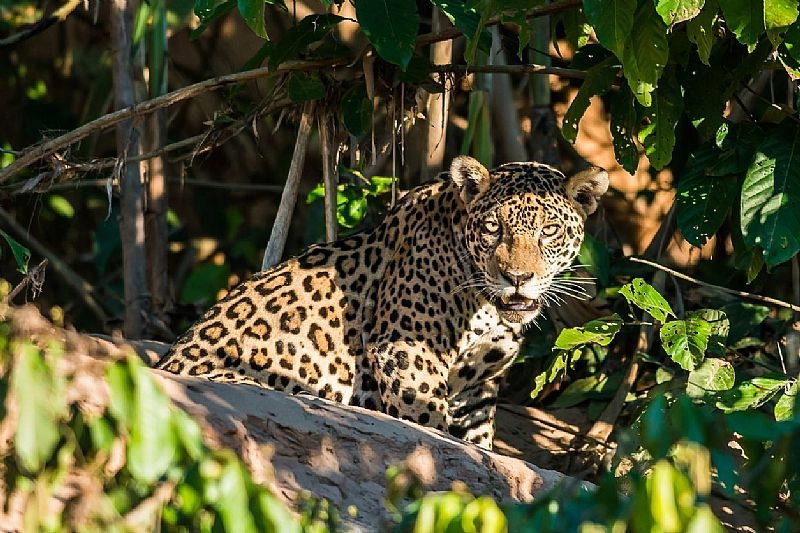
The jaguar is the largest cat in the Americas and a top predator in the Amazon. With its powerful build and distinctive spotted coat, it’s an apex predator that plays a vital role in maintaining the balance of the ecosystem. These big cats are solitary animals that roam large territories, hunting deer, capybaras, and even caimans.
As apex predators, jaguars play a crucial role in maintaining ecological balance at the top of the food chain. By preying on herbivores and other animals, they help regulate population sizes and prevent overgrazing. This natural control keeps the ecosystem stable and functioning properly. Without predators like jaguars, unchecked prey numbers could lead to the collapse of the entire ecosystem.
Unlike other big cats, jaguars are solitary creatures, rarely seen in groups. They establish and defend large territories, which can cover up to 50 square miles. This territorial behavior ensures that they have enough resources to survive, including prey and water. Jaguars use scent markings and vocalizations to communicate and establish boundaries with others.
Jaguars are skilled hunters, known for their powerful bite, which can crush the skulls of their prey. They primarily hunt at night, relying on stealth and strength to ambush their targets. Their diet is diverse, ranging from large mammals like deer and tapirs to smaller animals like turtles and fish. This varied diet allows them to adapt to different environments within the rainforest.
Sloths: Masters of Slow Survival
In the Amazon Rainforest, sloths are known for their slow movements and for spending most of their lives hanging upside down in trees. These unique mammals have adapted to their arboreal lifestyle with long limbs, curved claws, and a slow metabolism. Because they mainly feed on leaves, which are difficult to digest, they must conserve energy by moving slowly.
Moreover, sloths possess several adaptations that help them thrive high in the treetops. Their long, curved claws provide a strong grip on branches, allowing them to hang effortlessly. In addition, their limbs are specially built for climbing, thanks to a unique shoulder structure that supports slow and careful movements. Altogether, these traits make them perfectly suited for life far above the forest floor.
A sloth’s slow metabolism is one of its most defining features. This reduced metabolic rate helps them save energy, which is essential given their low-energy leaf diet. Since leaves are tough to digest and low in nutrients, sloths have evolved to eat slowly and rest often. As a result, their sluggish pace becomes an important survival strategy in the nutrient-poor treetops.
Furthermore, sloths have a remarkable digestive system that allows them to absorb as many nutrients as possible from their leafy meals. Their multi-chambered stomachs contain symbiotic bacteria that break down tough cellulose and aid digestion. Because this process is extremely slow, food can take up to a month to pass through their system. Consequently, this slow digestion is another key reason behind their famously lazy lifestyle.
Capybaras: Social Giants of the Wetlands
Capybaras are the world’s largest rodents and often live near rivers and other bodies of water in the Amazon. They are social animals that can form groups of up to 40 individuals. Capybaras are excellent swimmers and can hold their breath underwater for several minutes. Their diet consists mainly of grasses and aquatic plants.
Capybaras are highly social animals, living in groups that provide protection and companionship. These groups, known as herds, typically consist of several females, their offspring, and a few males. Group living allows them to watch for predators and care for each other’s young. The social bonds within these groups are strong, with individuals often engaging in mutual grooming.
Capybaras are exceptional swimmers, adapted to life near water. Their webbed feet and streamlined bodies enable them to move gracefully in aquatic environments. They can dive and stay submerged to avoid predators, using their ability to hold their breath for extended periods. Water is a crucial element of their habitat, providing food, hydration, and a means of escape.
Capybaras are herbivores, primarily feeding on grasses and aquatic plants. Their diet is rich in cellulose, which requires a specialized digestive system to break down. They practice coprophagy, consuming their feces to extract additional nutrients. This feeding strategy ensures they obtain the necessary nutrition to support their large size and active lifestyle.

Birds of the Amazon: Life in the Canopy
Birds of the Amazon Rainforest are a colorful and diverse group, each species contributing uniquely to the ecosystem. From powerful predators to vibrant songbirds, these avian inhabitants play critical roles in pollination, seed dispersal, and population control.
The harpy eagle is one of the largest and most powerful eagles in the world. With a wingspan of up to seven feet, it soars above the canopy searching for prey like monkeys and sloths. The harpy eagle is a top predator and plays a crucial role in controlling the population of its prey species.
Harpy Eagles: Kings of the Rainforest Skies
As an apex predator, the harpy eagle helps maintain the balance of its environment by regulating prey populations. By preying on medium-sized mammals like monkeys and sloths, it controls their numbers and prevents overpopulation. This predatory role is vital for maintaining the health and diversity of the rainforest ecosystem.
Harpy eagles are skilled hunters, using their powerful talons to snatch prey from the treetops. They rely on stealth and surprise, often ambushing their targets from above. Their keen eyesight allows them to spot prey from great distances, making them formidable hunters. This combination of strength and strategy makes the harpy eagle a top predator in its habitat.
Despite their prowess, harpy eagles face several threats, including habitat loss and hunting. Deforestation and human encroachment reduce their hunting grounds, while illegal hunting targets them for their feathers and as trophies. Conservation efforts are crucial to protect these magnificent birds and ensure their survival in the wild.
Macaws: Colorful Gardeners of the Amazon Rainforest
Macaws are colorful parrots that live in the Amazon Rainforest. They are known for their bright feathers and loud calls. These smart birds form strong bonds with their mates and often fly in pairs or small groups. Their strong beaks help them open even the hardest seeds, nuts, and fruits.
Their vibrant feathers show many colors, and these colors serve important purposes. For example, they help macaws recognize each other and attract mates. In addition, their loud calls help them communicate in the thick forest, allowing flocks to stay close and safe.
Macaws are also very social. They often choose one partner for life, and these pairs groom and feed each other. Because of this strong bond, they are able to raise their young successfully. Their social behavior also helps flocks work together to find food and watch for danger.
These parrots are important for the Amazon Rainforest. As they eat fruits and nuts, they drop seeds in new areas. This helps plants grow in different places and keeps the forest healthy. Since their strong beaks let them open seeds that many animals cannot, they play a key role in keeping the ecosystem balanced.
Toucans: Iconic Beaks and Forest Seed Dispersers
Toucans are easily recognizable by their large, colorful bills. These bills help them reach fruit on branches that might be too thin to support their weight. Toucans are social birds, often found in small flocks. Their diet mainly consists of fruits, but they also eat insects and small reptiles.
The toucan’s large bill is a remarkable adaptation that allows it to access food in hard-to-reach places. This versatile tool helps them pluck fruit from branches and even catch insects and small reptiles. The bill’s lightweight structure, despite its size, ensures that it doesn’t hinder their flight or movement.
Toucans are social creatures, often seen in small flocks that provide safety and companionship. These flocks move through the forest together, foraging and communicating with each other. Their social structure helps them defend against predators and find food more efficiently, enhancing their chances of survival.
Toucans are essential for maintaining the health of the rainforest through their role in seed dispersal. By consuming fruits and later excreting the seeds, they aid in the regeneration of plant life. This process is critical for sustaining the diversity and vitality of the forest, ensuring that it continues to thrive.

Reptiles and Amphibians: Silent Guardians of the Forest
The Amazon Rainforest is home to a wide variety of reptiles and amphibians, each with unique adaptations that allow them to survive in this diverse environment. From stealthy hunters to brightly colored amphibians, these creatures play significant roles in the ecosystem.
The green anaconda is one of the world’s largest snakes, capable of growing over 20 feet long. These powerful constrictors are found near water, where they ambush prey such as fish, birds, and mammals. Anacondas are excellent swimmers and can stay submerged for long periods.
Green Anacondas: Giants of the Wetlands
In the Amazon Rainforest, one of the most powerful animals is the green anaconda. This giant snake is known for its huge size and incredible strength. It can wrap its strong, muscular body around prey and overpower it with ease. In addition, green anacondas are great swimmers because their nostrils sit on top of their heads, allowing them to breathe while staying almost fully underwater.
To catch food, green anacondas use patience and surprise. They wait quietly in the water until an animal comes close to drink. Then, they strike very fast. Their strong jaws and tight coils help them bring down large animals like capybaras and even caimans.
As top predators, green anacondas help keep the ecosystem balanced. They control the numbers of fish, birds, and mammals. Because of this, they prevent overpopulation and help keep both land and water environments healthy.
Poison Dart Frogs: Tiny but Toxic
In the Amazon Rainforest poison dart frogs are small, brightly colored amphibians known for their toxic skin secretions. Indigenous people have used their poison for hunting by applying it to blow darts. Despite their small size, these frogs play a significant role in controlling insect populations in the rainforest.
To start, Poison dart frogs are famous for their vibrant colors, which serve as a warning to predators about their toxicity. These colors range from bright blues and yellows to reds and greens, acting as a deterrent to potential threats. Their skin secretes potent toxins that can be lethal, providing an effective defense mechanism against predators.
The toxins produced by poison dart frogs have been utilized by indigenous tribes for hunting. By applying the poison to blow darts, hunters can immobilize prey with a single shot. These frogs hold cultural significance for many indigenous communities, representing a connection to the natural world and traditional practices.
Finally these frogs play a vital role in controlling insect populations within the rainforest. By feeding on ants, termites, and other small invertebrates, they help maintain a balance in the ecosystem. Their presence ensures that insect populations do not become overwhelming, contributing to the overall health of the forest.
Caimans: Reptilian Apex Predators
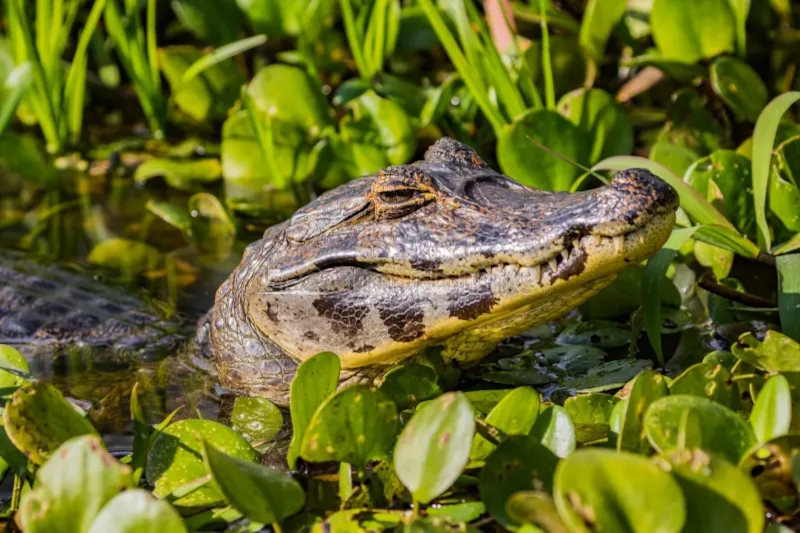
In the rivers and wetlands of the Amazon Rainforest, one of the most important predators is the caiman. These reptiles are close relatives of alligators and crocodiles. They are strong hunters that eat fish, birds, and small mammals. Because of this, they help keep the ecosystem in balance by controlling prey numbers.
To begin with, caimans have several special features that make them great hunters. Their smooth bodies and powerful tails help them move quickly through the water. Moreover, their sharp teeth allow them to grab and hold onto their prey with ease. Their eyes and nostrils sit on top of their heads, so they can stay mostly underwater while still watching what happens around them.
In addition, caimans are opportunistic predators, which means they eat many kinds of animals. They use quiet movement and sharp senses to sneak up on their prey. After that, they attack with a sudden burst of speed. This behavior helps them control the number of fish, birds, and small mammals in their habitat.
Finally, as apex predators, caimans play a key role in keeping their environment healthy. By reducing prey populations, they prevent overpopulation and protect natural resources. Because of their presence, the rivers and wetlands of the Amazon remain diverse and full of life.
Insects: The Hidden Workforce of the Rainforest
Insects are the quiet helpers of the Amazon Rainforest, and they do many important jobs. They help with pollination, decomposition, and nutrient cycling. Because they are so many and so diverse, they keep the rainforest healthy and working well. In fact, without insects, the Amazon ecosystem would not survive.
Leafcutter ants are one of the most amazing insects in the rainforest. They can cut and carry leaf pieces that are much bigger than their own bodies. After that, they bring these leaves back to their nest. They use the leaves to grow a special fungus, which is their main source of food.
Because leafcutter ants recycle plant material, they also help return nutrients to the soil. As a result, the ground becomes richer and stronger. This process supports plant growth and helps keep the Amazon Rainforest healthy and alive.
Leafcutter Ants: Farmers of the Forest Floor
Leafcutter ants live in very organized colonies with a clear social structure. Each colony can have millions of ants, and they are divided into groups that do different jobs. Some ants look for food, others care for the young, and others protect the nest. Because of this teamwork, the colony works smoothly and stays strong.
These ants also have a special relationship with a type of fungus that they grow for food. They cut and carry pieces of leaves back to their nest, where the leaves help the fungus grow. In return, the fungus gives the ants the nutrients they need. This partnership shows a simple but amazing example of two species helping each other.
Leafcutter ants also help the rainforest in important ways. As they collect and break down plant material, they help with decomposition. This process returns nutrients to the soil. As a result, the soil becomes richer and healthier, which helps plants grow better throughout the Amazon Rainforest.
Blue Morpho Butterflies: Shimmering Symbols of the Amazon
The blue morpho butterfly is famous for its bright blue wings. These butterflies live across the Amazon Rainforest, and their strong color warns predators that they taste bad. Because of this, many animals avoid eating them. Even so, blue morphos are still important for pollination and also serve as food for some animals.
Their wings shine with a dazzling blue color because tiny scales reflect light. This bright look helps scare off predators. In addition, it signals that the butterfly may be toxic or unpleasant to eat. As a result, the blue morpho has a better chance of staying safe.
Blue morphos help the rainforest by pollinating many flowering plants. As they drink nectar and move from one flower to another, they carry pollen with them. This simple action helps plants reproduce. Therefore, their work supports the growth and health of the Amazon Rainforest.
Even with their defenses, blue morphos are still eaten by some birds and reptiles. Their role as prey helps keep the food chain balanced. Moreover, their work as both pollinators and food makes them very important to the ecosystem. Their presence shows how every creature has a place in the Amazon Rainforest.
Bullet Ants: Tiny Insects with a Powerful Sting
The bullet ant is known for its extremely painful sting, which many say feels like a gunshot. Even so, these large ants are important for the Amazon Rainforest. They defend their nests with great force, and they help control the number of other insects in the area. Because of this, they play a key role in the ecosystem.
Bullet ants are also famous for their strong venom, which causes intense pain. This powerful sting protects them from predators. In addition, it warns any animal or person who gets too close to their colony. As a result, their nests stay safe from danger.
These ants live in organized colonies with a clear order. Workers look for food and guard the nest from threats. When they feel attacked, they react quickly and aggressively. Thanks to this structure, the colony uses its resources well and stays protected.
Bullet ants help the rainforest by controlling other insect populations. They hunt many kinds of small invertebrates, which keeps their numbers balanced. Therefore, their presence supports the health of the Amazon Rainforest and helps prevent insect overpopulation.
Threats to the Amazon Rainforest and the Need for Conservation
Wildlife conservation is vital for preserving the unique biodiversity of the Amazon Rainforest. Deforestation, illegal logging, and habitat destruction pose significant threats to the animals and plants that call this region home. Organizations like the Tambopata Research Center work tirelessly to protect these valuable ecosystems and promote sustainable practices.
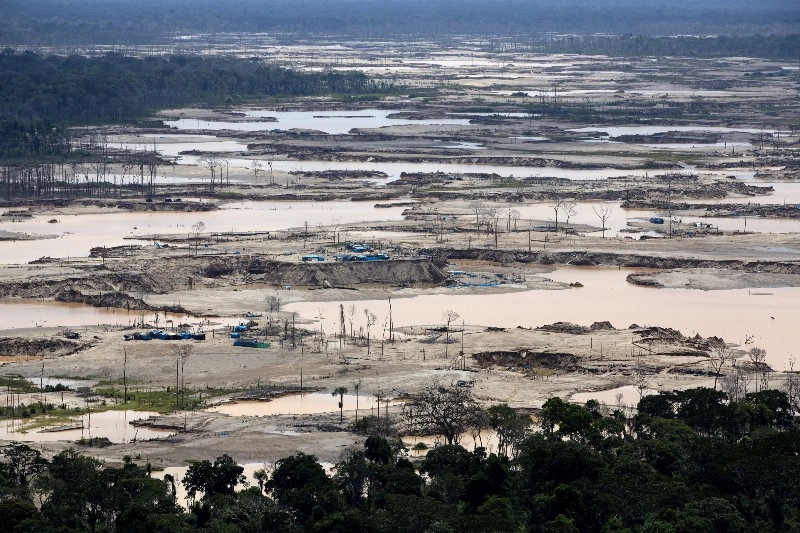
The Amazon faces numerous threats that endanger its diverse wildlife. Deforestation and illegal logging are major issues, driven by agriculture, mining, and urban expansion. These activities result in habitat loss and fragmentation, disrupting the natural habitats of countless species and threatening their survival.
Several organizations are dedicated to protecting the Amazon and its inhabitants. Groups like the World Wildlife Fund (WWF) and Conservation International work to promote sustainable practices and protect critical habitats. These organizations conduct research, support local communities, and advocate for policy changes to ensure the long-term preservation of the rainforest.
Sustainable practices are crucial for balancing human needs with environmental conservation. By promoting sustainable agriculture, responsible logging, and eco-friendly tourism, we can reduce the impact on the Amazon. These practices benefit both the environment and local communities, providing economic opportunities while preserving the rainforest for future generations.
A Shared Responsibility to Protect the Amazon
By supporting wildlife conservation efforts, we can help protect the Amazon Rainforest for future generations. Also, it is important to raise awareness about why these ecosystems matter. In addition, we should promote sustainable actions that support both nature and local people.
The Amazon Rainforest is a treasure full of life. It is home to many animals, plants, and insects. For example, it shelters the powerful jaguar and the tiny poison dart frog. Each species has a special job that helps keep the rainforest in balance. So, by choosing conservation and sustainable practices, we help protect the Amazon for years to come.
The huge variety of life in the Amazon shows how every species is connected. Each one, big or small, plays a part in the health of the forest. Because of this, we must protect every piece of the ecosystem. Otherwise, losing even one species can affect many others.
Today, Amazon faces serious threats. For this reason, we must act quickly to save it. Deforestation and climate change are growing fast, and they harm the rainforest every day. Therefore, by supporting conservation projects and speaking up for better policies, we can help create a safer future for the Amazon.
Protecting the Amazon is a shared duty. People, governments, and groups around the world must work together. In addition, we can help by learning more, supporting conservation work, and using sustainable habits. Together, we can make sure the Amazon Rainforest stays alive and strong for generations to come.

