Suppose you were walking on a path in the Peruvian twilight. It smells of wet soil but first the noise; a sort of clicking and whistling and droning rhythm returns the impression of a busy machine shop rather than a forest. It is the words of the most vocal inhabitants of the Amazon, which marks the beginning of the night shift in the jungle. This article serves as Frog Species of the Peruvian Amazon: A Complete Wildlife Guide for travelers, photographers, and budding herpetologists.
While a temperate forest might hold a dozen amphibian types, the frog species of the Peruvian Amazon exist on an entirely different scale. Biologists list Peru as a global capital of amphibians, with more than 600 species ranging from just a few inches to the size of a grapefruit. Herpetological surveys indicate that one hectare of such lowland rainforest can hold a greater number of frog species than the British Isles altogether. To any one who may wonder what the frogs are like in Peru, this is simply surprising.
Where to Find Frog Species in the Peruvian Amazon
To find its way through this green ocean one will need to know where to search. The highest concentrations of frogs occur in the southern lowland jungles, especially in Tambopata National Reserve and the legendary Manu National Park. These areas serve as the biological caches, which shield both huge systems of swamps, streams and trees where these animals have exhibited over millions of years of speciation.
It takes more than using a flashlight to observe these creatures and what makes the problem even harder is the fact that one needs to understand the micro-habitats in which they live. Whether it is the canopy-residing leaf frogs or the ability to recognize these species among the masters of camouflage on the ground, it becomes both amazing and fascinating how much noise would be an incredible wall, and how much life it makes discernible.
The Sponge-Skin Secret: Breathing and Survival
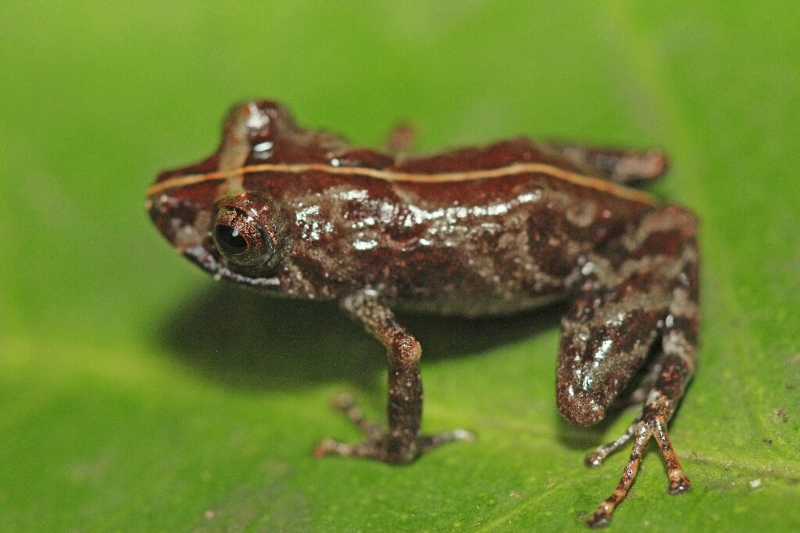
Your skin is there to protect you against the outer world, yet to an amphibian there is nothing like a barrier. Frogs rely on highly specialized bodies to survive in these environments. Their skin acts like a sponge, covered by a unique membrane that absorbs moisture and oxygen directly from the air. Instead of drinking water through their mouths, they absorb it through their skin while sitting in water. Scientists call this process cutaneous respiration, which allows frogs to breathe partially through their skin. This is why high humidity in the Amazon is essential for their survival.
Although technically all toads are frogs, the lines in the wild normally come down to features of texture and moisture retention. Plastic frogs tend to maintain a frequently moist skin to be able to gain as much oxygen as possible, and by doing this they are bound to the stream and pond. By contrast, toads have developed warty drier skin that serves to keep the interior moisture locked in. This hard cover is like a hydration suit in which they can go much deeper into the interior where their naked counterparts would soon become dehydrated.
Because of this biological dependence on moisture, even the most diverse Amazon rainforest frogs occupy very specific microhabitats. Frogs choose environments where humidity remains constant—whether in wet leaf litter, beneath dense vegetation, or on mist-covered branches. Their location is never random; it is strictly determined by their need to breathe and retain moisture.
Sky-High Residents: Giant Monkey Frogs and Tree-Dwelling Masters
Several feet off the damp forest floor, the laws of survival come into a total reversal. In this case, arboreal frogs have to struggle with a drying wind and gravity all the time. These arboreal amphibians overcome the challenge of climbing by using a toolkit of physical adaptations that function as biological climbing equipment, allowing them to scale vertical jungle surfaces that land creatures cannot reach.
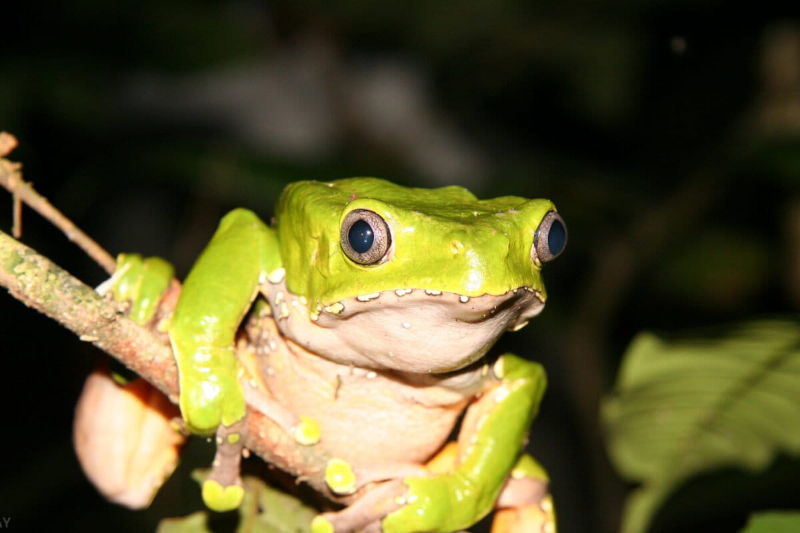
The Giant Monkey Frog (Phyllomedusa bicolor ) is one of the greatest patrons of this layer of the canopy. This is by comparison a slow creature with a gait so much like that of a human that, unlike its cousins which skip in alarm, this gem of a frog strolls steadily along the branches with a grip that is as human as it can be. It has evolved an interesting remedy to the problem of keeping cool: it has a recognized leak behind its ears, and spreads the leak all over its body with its legs.
This is a natural sunscreen that prevents the drying of the frog since it traps moisture to keep the frog in the open sun without drying up. Although the use of the Giant Monkey Frog as a medicine in indigenous cultures to perform traditional hunting practices, commonly referred to as Kambo, ecologists value such a behavioral adaptation seen in the species.
The Evolution of Arboreal Survival Strategies
Scanning the leaves at night reveals three specific engineering feats that define common Amazonian tree frog species:
- Suction-Cup Toes: Expanded tips on their digits secrete a sticky mucus, creating a wet seal that holds tight to slick leaves.
- Opposable Thumbs: Specialized digits that function like a grasp, perfect for gripping thin vines rather than just resting on them.
- Lipid Barriers: Waxy coatings that prevent dehydration in the breezy upper canopy.
Giant Monkey Frog has to survive with the help of its size and waxy cover, unlike other species, which have to use a much more daring method. They do not creep or hide high in the trees, they strider on the forest floor in their brightly colored neon “DO NOT TOUCH” sign.
The Warning Colors of Tambopata: Poison Dart Frogs and Mimics
Walking through the undergrowth, you generally think that all the creatures will attempt to take shelter in the shadows, but the family of Dendrobatidae is the one who does not follow this. Instead of relying on concealment, these amphibians use aposematism, displaying bright colors to warn and deter potential predators.. The bright patterns as emphasised by field guides such as neon blues, blazing yellows and dark reds are effective in passing across a message that the snack will cause instant sickness or death.
The distinction that is central to this presentation is behind the chemical weaponry, which is based on the fact that these frogs are poisonous rather than venomous. Unlike a viper that injects venom through its fangs, the most toxic frogs in the Peruvian rainforest harm predators only when they are touched or eaten. Remarkably, this toxicity is not inherent, as species such as the diminutive Ranitomeya attain their protection by bio-sequestration, picking up alkaloids in their diet of certain ants and mites. As a result, the dart frogs that have not been fed on these food items in captivity are not harmful at all.
Evolution too has created an ingenious loophole to species who are lacking chemical defenses but desire the protection that comes with such. In Batesian mimicry, one species of harmless frogs uses the “uniform” of a fierce neighbor to use as a bluff to protect itself. The distinction between mimicry and camouflage is that camouflage conceals a frog to the sight of a predator, whereas mimicry conceals it in the fear of the predator, with a stolen reputation to get another day on the planet.
Windows into the Heart: Translucent Glass Frogs
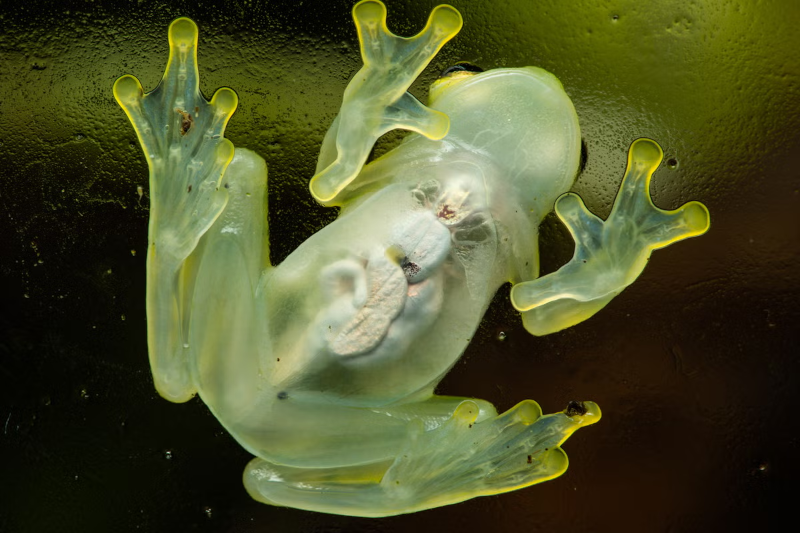
The frogs of the Centrolenidae family have learned to be negative unlike their flashy neighbors. They have defleshed their own bodies rather than tattooing their warning signs onto them, providing a kind of literal opening into their own biology. This effect enables light to penetrate through their bodies that makes the image to be easy to the eye on the leaf they are lying on. When you look up at a leaf, you can see not just a small green frog, but also its heart, digestive system, and delicate bones visible through its translucent body.
In the diffracted light in the rain forest, solid colors form clear outlines that predators can easily follow. This visual lock is broken by translucency. Through this process of enabling the color of the vegetation to pass through their bodies, these amphibians obtain a type of physiological camouflage creating a perfect combination between the creature and the surrounding. The practice guides teach us that this is best adapted by looking down upon the frogs- exactly as a hungry bird or snake would look at the canopy.
Camouflage Through Transparency in the Rainforest Canopy
To find these apparition characters, you have to turn your eyes up out of the forest floor and above running water. In Tambopata National Reserve or Manu National Park, glass frogs can be located in the riparian zones, i.e. those areas where plants are directly over streams. This is a good location; their skin will always be wet with humidity, but should a predator strike, the frog can always fall in the moving water to disappear at once.
These grey-plumaged little creatures are amazingly ferocious in their parental capacity, high above the present. Male glass frogs frequently guard clutches of eggs laid on the lower surface of leaves and kick wasps attempting to plunder the nest away. Once they are born, they will be dropped into the stream because their vigilance will guarantee the survival of the next generation.
Invisible Hunters: Horned Frogs and Leaf-Litter Masters
While glass frogs rely on invisibility above, the creatures of the forest floor rely on deception below. In the dense detritus of the Amazon, being green is a liability. Instead, terrestrial species have evolved to look exactly like the decay around them. This is the domain of the “sit-and-wait” predator, a creature that does not chase its food but simply becomes a trap waiting to be sprung.
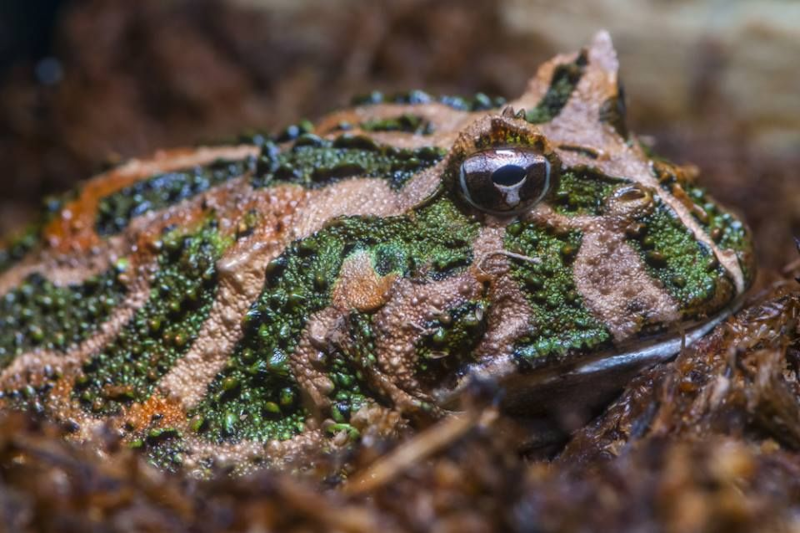
Few examples illustrate this better than the South American Horned Frog (Ceratophrys). Often called “Pac-Man” frogs due to their rotund bodies and massive mouths, these amphibians are practically indistinguishable from the ground they sit on. Searching for a horned frog in the undergrowth requires looking for symmetry in the chaotic leaves. They possess “dermal horns” above their eyes that break up their silhouette, allowing them to remain motionless until they snap their jaws shut on passing lizards, mice, or other frogs.
To spot these masters of disguise, it helps to identify the visual strategies used by leaf litter frogs:
- Leaf Mimicry: The frog copies the sharp ridges, dried veins, and brown tones of dead foliage to appear as a discarded leaf.
- Moss Camouflage: The frog uses irregular, warty skin bumps and mottled greens to blend seamlessly into lichen-covered roots.
The understanding of these visual subtleties alters your hiking behavior since you can no longer find animals but you find something called debris blinking. Nevertheless, as perfect their disguise is, your eyes will fail you more often. You have to turn off your light and learn to hunt with the other senses to properly list all its species in the jungle.
Master the Midnight Safari: Photographing and Identifying by Sound
Due to the great effectiveness of visual camouflage in the daytime, effective walks at night are based on the concept of eye-shine to display the concealed. You can spot the light reflected from the tapetum lucidum by scanning the vegetation with your flashlight held at eye level. This trick makes you see an invisible amphibian into a clear, diamond-like sparkle in the dark that gives you an opportunity to see the tiny frogs sitting on leaves a full twenty feet apart.
Listening to the Jungle: Identifying Frogs by Sound
After you notice that tell-tale glimmer, your ears become your main weapon; you will find it much more convenient to detect Amazonian tree frogs with the aid of your ears than by vision alone. To overcome the jungle noise the male frogs fill their vocal sacs by pumping until they get a species-specific call that cuts the noise. Although a Gladiator Tree Frog may appear to be the hammer of a blacksmith, other frogs will produce soft high pitched whistles. Follow a noise down the street, and you will retire to watch occasionally the pathetic voice of the male in wooing a mate, offering the best chance to watch.
Night Photography and Essential Gear for Frog Watching
To have photos of these moments, one must cope with the extreme level of humidity in the jungle and low light. In night hike frog photography, reflection is the rule that must be observed most. The skin of a frog is damp and functions as a mirror; a direct naked flash will just show a photo of a white and overexposed gob. Rather, employ a diffuser, or even just a bit of semi-clear tape over your light source to mellow the light beam, which would take away the glare and display the undulations of the skin, their fine textures and shades.
Timing and preparation are essential in order to have the maximum probability of a successful safari. The wet season (November to April) is the most appropriate period to watch frogs in Peru as huge breeding activities are initiated by heavy rains, and the forest floor becomes vibrant. Whatever you are about to do in the dark, you need to have the essentials in a kit:
- Headlamps: Critical for spotting eye-shine while keeping hands free for cameras.
- Macro Lens: Necessary for small subjects; distinct “macro modes” on modern smartphones work well.
- Rain Gear: Essential, as the highest frog activity occurs during active downpours.
- Rubber Boots: Vital protection against ants and snakes while wading through the undergrowth.
Why a Silent Forest is a Dying One: Protecting Bio-indicators
A rain forest is not a quiet thing, it is a wake up call. Since amphibians breathe and drink through the permeable skin, they are said to act as the bio-indicators most sensitive to the environment, which is a natural litmus test of nature, in essence. As a result, tracking the welfare of Peruvian Amazon amphibians would provide researchers with an instant gauge of the wellbeing of a whole ecosystem; frogs would start dying out then the researchers could know that the water table and atmosphere are already unsustainable, by the time other species would bear signs of illness.
The extreme sensitivity has the disadvantage of rendering them susceptible to a microscopic killer named Chytridiomycosis. Researchers are now in a race to know the disastrous effect of the chytrid fungus on the people of Peruvian frog, an organism that destroys the skin of a frog by suffocation as it chokes its capacity to maintain the electrolyte balance. Although they have caused the silence of streams of the world, the great undisturbed areas of the Amazon are an important buffer zone, in which populations that are resistant still might be preserved.
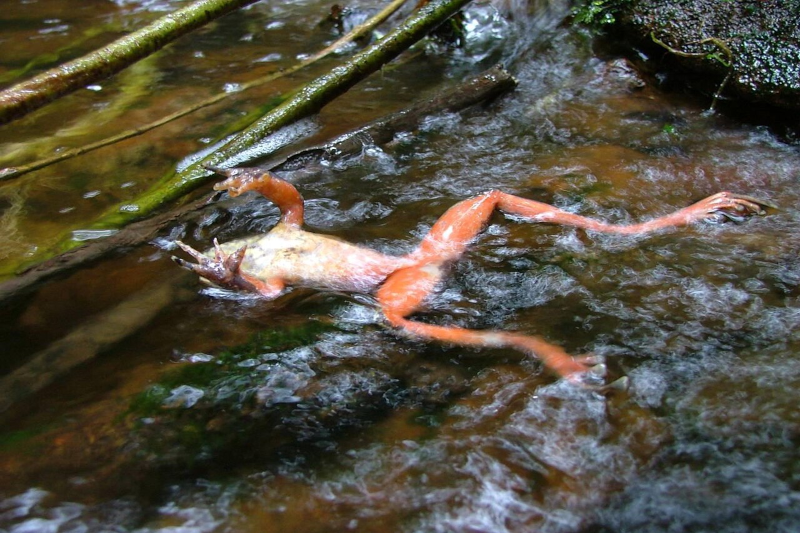
You play a direct role in this survival battle in the jungle. Responsible ecotourism generates the essential funding needed to protect the extraordinary frog biodiversity of Manu National Park from deforestation and pollution. With the selection of eco lodges and guides who focus on conservation, you will guarantee that the habitat does not suffer any damage and that it will still be possible to listen to the nightly chorus of the Amazon even in the generations to come.
Synthesis and Next Steps
You are no longer a mere admirer but now an expert and can observe the rainforest in vivid layers of life as opposed to a green wall. Be it arboreal acrobats, leaf litter imitators, or aquatic masters, you have now known the complex survival techniques as shown in this guide.
An awareness is the real beginning to conservation. Think about conserving wetlands or take your boots and go to Iquitos or Puerto Maldonado to see these amphibians with your own eyes. When you retrieve your guide to wildlife in the field, it is an even greater responsibility of watching. Use this as a quick reference for frog species Peruvian Amazon research, plan responsible night walks, and continue exploring the remarkable frogs of Peru. The chorus of the Amazon is straining–and you are fully aware what to attend to now.

