Madre de Dios is one of Peru’s most rewarding regions for birdwatching, and guans are among the forest birds that make a walk through the Amazon feel truly alive. In places such as Tambopata National Reserve, patient visitors may encounter the Spix’s guan moving through the canopy or feeding quietly near fruiting trees. This guide explains what a guan bird is, where to look, and how to improve your chances without disturbing the wildlife.
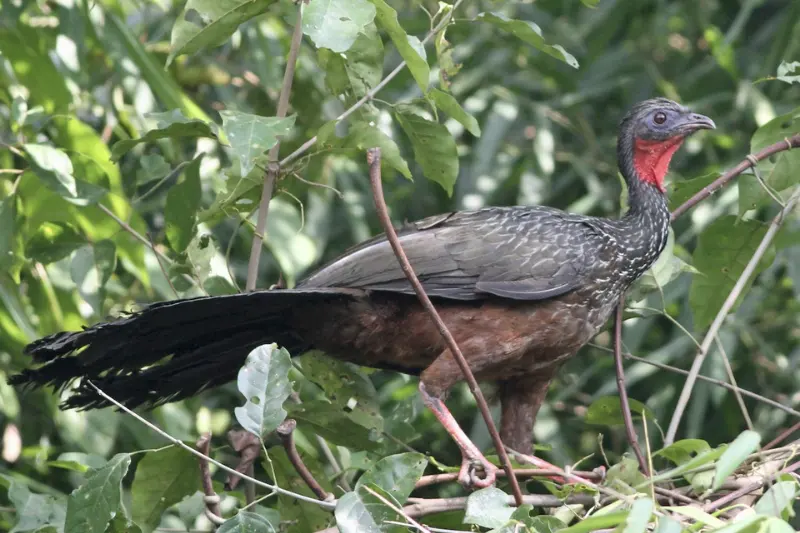
What makes guans special in the Amazon?
Guans are large, forest-dwelling birds in the same broader family as chachalacas and curassows, and they often feel like the Amazon’s quieter answer to wild turkeys. Their size, long tail, deliberate movement, and habit of staying partly hidden among branches usually give them away. In undisturbed tropical forest, they play a practical ecological role as fruit eaters, moving through the trees and contributing to the natural rhythm of seed dispersal, a role shared by several species featured in Top Animals You’ll Find in the Tambopata Amazon Rainforest.
For birders, guans are exciting because they are both visible and elusive. They are not tiny canopy specks, but they can still disappear quickly behind leaves, vines, and shadow. A good sighting often comes from listening first: rustling branches, heavy wingbeats, or soft movement above the trail may reveal a bird before the eye catches it.
Tambopata National Reserve is prime guan habitat
Tambopata National Reserve in Madre de Dios protects a rich Amazon landscape known for extraordinary bird diversity. Peru’s protected-area authority reports roughly 648 bird species in the reserve, including major Amazon icons such as macaws, harpy eagle, and other forest birds. That diversity is one reason Tambopata stays a favorite destination for visitors who want more than a quick wildlife checklist.
Guans fit naturally into this setting because they prefer forested environments, especially areas where mature trees, fruiting plants, and relatively quiet trails give them cover, much of it made up of the species catalogued in A Guide to the Incredible Plant Species of Tambopata Rainforest. Around lodges, riverine forest, terra firme forest, and edges near clearings, birders may have chances to see them moving at dawn or late afternoon. The key is not rushing. In the rainforest, the best sightings often come when you stop walking, let the forest settle, and scan slowly from the understory to the mid-canopy.
How can you identify a Spix’s guan?
Spix’s guan is a large Amazonian guan, generally associated with humid lowland and foothill forest, and it is one of the species birders may hope for in the Madre de Dios region. Look for a long-tailed, dark-bodied bird with a small head, a slightly hunched posture, and careful movement along branches. It is more often seen walking or hopping through trees than making dramatic open flights.
Identification is easiest when shape, behavior, and setting combine rather than relying on one quick feature. A guan bird may look plain at first glance, especially in low light, but its size and arboreal movement help separate it from smaller forest birds. Binoculars help most when focused on the head, throat area, tail length, and any visible contrast in the plumage. If the bird moves deeper into foliage, resisting the urge to chase it pays off; staying still may bring a second, better view.
Field clues that help you spot guans
Guans rarely announce themselves like bright parrots at a clay lick, so careful observation becomes the best tool. Walking slowly, pausing often, and scanning fruiting trees where larger birds may feed all help. Many guans eat fruit and other plant material, and Spix’s guan is commonly described as feeding on fruits, young leaves, shoots, and seeds.
Useful clues include:
- Heavy movement in branches: Guans have weight and presence. A branch shake may be more revealing than a call.
- Silhouettes at dawn: Early light can show the long tail and bulky body before colors are clear.
- Fruiting trees: Stop near active trees and watch quietly for several minutes.
- Low, careful sounds: Listen for wing movement, soft clucks, or rustling rather than expecting loud song.
- Pairs or small groups: If you see one bird, scan nearby branches before moving on.
A practical approach involves birding in layers. First, scan the trail ahead for birds on the ground or low branches. Then lift your binoculars into the mid-story, checking open perches, vine tangles, and fruit clusters. Finally, look higher into the canopy, especially where sunlight touches exposed branches. Researchers studying similar movement patterns often turn to Camera Trapping in Tambopata National Reserve, which can catch activity that a passing hiker would easily miss.
The best moments are quiet ones
In Tambopata, early morning is usually the most comfortable and productive time for bird activity. The air feels cooler, forest sounds are clearer, and birds are often feeding after first light. Late afternoon can also be rewarding, especially along quieter trails or near forest edges where birds move before dusk. For travelers curious about after-dark encounters as well, Night Wildlife in the Amazon of Tambopata covers a completely different set of species that emerge once the guans have settled for the night.
Good guan watching depends less on covering long distances and more on reading the forest. A fast walker may pass several birds without knowing it. A patient observer who waits near promising habitat may enjoy longer views, better photographs, and a more relaxed experience. This matters especially for guans because they can be sensitive to sudden movement and may retreat into dense cover if approached too directly.
Simple gear and habits make a difference
Complicated equipment isn’t necessary to enjoy guans in Madre de Dios, but a few choices can improve the odds. The rainforest is humid, shaded, and visually busy, so comfort and readiness matter, and What to Pack for Tambopata offers a fuller rundown of clothing and gear suited to these conditions.
Bring and use:
- Binoculars with good low-light performance: Forest birding often happens under shade.
- Neutral clothing: Greens, browns, and muted colors help you blend into the setting.
- A small notebook or birding app: Record location, behavior, time of day, and habitat.
- A dry bag or rain cover: Sudden rain can arrive quickly in Amazon environments.
- Quiet trail habits: Speak softly, avoid sudden gestures, and let your guide set the pace.
Photography is possible, but thinking like a birder first and a photographer second helps. Watching the bird’s route, anticipating where it may step into an opening, and avoiding pushing closer for a shot all pay off. A respectful distance often produces both better behavior and better memories.
Responsible birdwatching protects the experience
Seeing guans is a privilege because it depends on healthy forest and thoughtful tourism. Staying on marked trails, following reserve or lodge rules, and avoiding playback unless a guide confirms it is appropriate all matter. Even then, restraint counts. The goal is to observe natural behavior, not pressure a bird into reacting.
Responsible birdwatching also supports the broader value of places like Tambopata National Reserve. When travelers show interest in forest birds, local guides, lodges, and conservation programs have stronger reasons to protect the habitats those birds need. A single guan sighting may seem small, but it belongs to a much larger story of intact Amazon forest, one closely tied to the seasonal rhythms outlined in Amazonian Rain, River, and Forest: Climate of Tambopata.
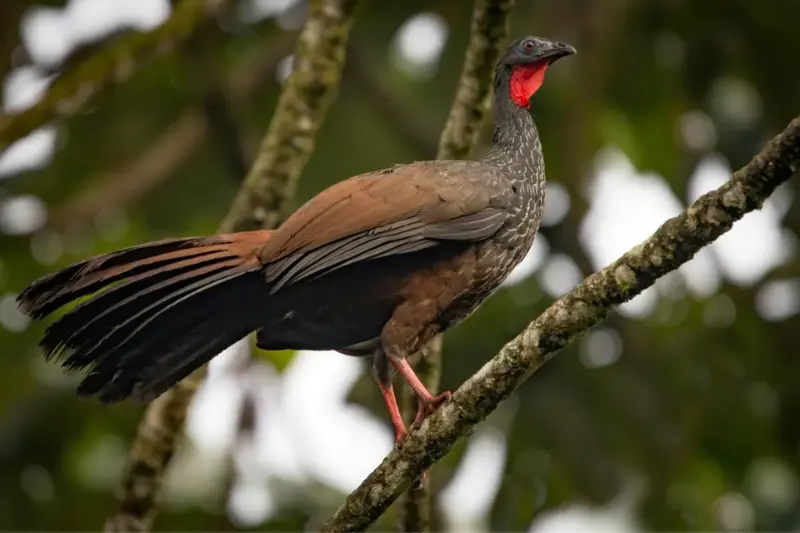
A memorable Amazon bird for patient observers
Guans may not be the loudest or brightest birds in Madre de Dios, but they are deeply satisfying to find. Their quiet presence rewards visitors who slow down, listen carefully, and pay attention to the forest beyond the obvious highlights, and beyond the more elusive residents covered in Rare Animals of the Amazon Tambopata Wildlife Guide. For anyone with Spix’s guan on their wish list, giving yourself time in good habitat, starting early, and letting the Amazon reveal the bird on its own terms makes all the difference.
For many travelers, that is the real appeal of birding in Tambopata: every trail has layers. Macaws may command the sky, tanagers may flash through the trees, and somewhere in the green middle distance, a guan may be stepping silently along a branch, waiting for the careful observer to notice.

