Motor dies, paddle drips, macaw screeches somewhere in the distance. That sensory shift is where Tambopata actually starts. Most travelers experience the jungle from noisy motorized boats, scaring away the exact wildlife they came to see without realizing it. Silence changes everything out here.
Local naturalist guides point out that choosing to kayak in Tambopata River gives visitors a distinct stealth advantage, spotting up to 30% more animals than motorized tours. Gliding inches above the water turns a standard tour into a silent safari. Ghost on the water, close encounters with sunbathing caimans and giant river otters, no jungle alarm triggered.
Situated in Peru’s Madre de Dios region, this waterway is the ideal gateway for a serious kayak river adventure through Amazon rainforest. No extensive athletic training required. Professional guides chart safe gentle corridors of calm water, anyone can trade engine fumes for eye-level connection with the jungle.
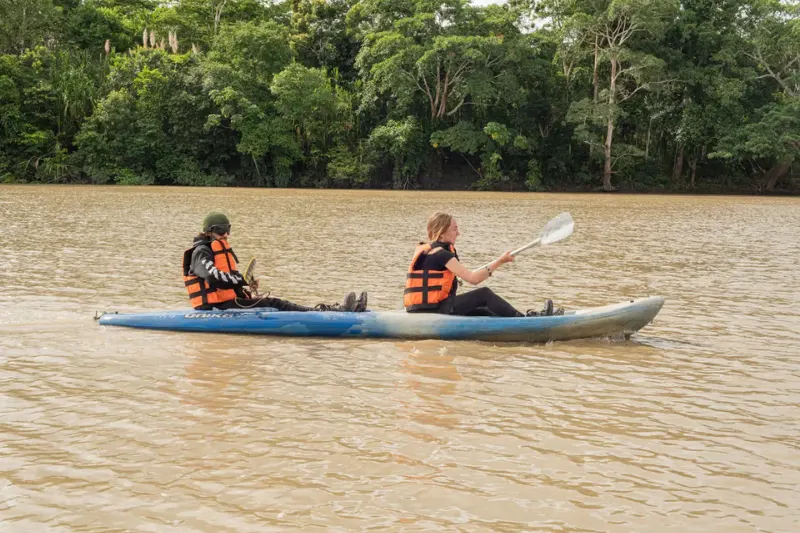
Finding the Biological Crossroads: Why Tambopata is the World’s Best ‘Classroom’
That chocolate milk color in the water has a reason. Paddling the Madre de Dios watershed means floating on liquid mountains, rushing currents carrying mineral-heavy Andean sediment down into Tambopata National Reserve. Those nutrient-packed deposits wash ashore to form the famous clay licks, natural pharmacies drawing hundreds of colorful macaws to feast on vital minerals.
Dramatic shift from towering peaks to flat jungle creates a biological crossroads where distinct ecosystems collide. Following the river’s natural path on a kayak river adventure traverses three unique biological zones:
- The Andean foothills, where rapid cooler currents first gather momentum.
- The transition zone, mixing high-altitude mineral runoff with tropical warmth.
- The lowland forest, a sprawling humid habitat bursting with immense biodiversity.
Gliding past these diverse riverbanks shows the stark visual contrast between untouched primary forest with ancient widely spaced trees and dense tangled vines of younger secondary forest reclaiming the water’s edge. Connecting with these untamed spaces requires a quieter lower approach than any motorboat allows, something a Tour Kayaking in Madre de Dios River delivers from the first paddle stroke.
The Stealth Vehicle Advantage: How to Spot Giant Otters and Caimans from Inches Away
Traditional wildlife tours use motorboats that trigger an animal’s flight zone early. Standing human on a loud boat, recognizable threat. A kayak changes that dynamic by lowering the silhouette to something flat and unfamiliar, non-threatening shape sitting close to the waterline. Animals rarely perceive it as dangerous, drifting significantly closer becomes possible before they retreat.
Stealth is crucial for safely observing the Amazon’s apex predators. Black caimans at night identified by massive broad snouts, different from the smaller Spectacled Caiman’s slender raised eye-ridge. When learning how to kayak close to wildlife without disturbing it, follow this riverbank approach protocol:
- Stop paddling entirely and let the current glide you forward.
- Tuck oars flat against the hull to eliminate splashing.
- Avoid direct eye contact, which predators often read as a challenge.
- Maintain at least twenty feet of distance from the shore.
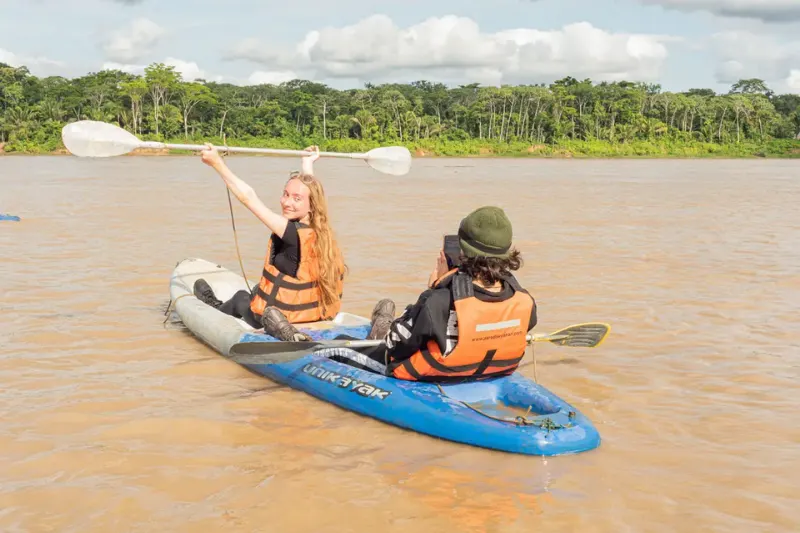
River vs. Lake: Choosing the Right Water Adventure for Your Energy Level
Main waterway or secluded lake comes down to preferred pace. Travelers assume Amazonian paddling trips demand Olympic endurance, they don’t. Main river uses current-assisted paddling, natural conveyor belt reducing muscle fatigue while moving swiftly past dense jungle banks. Enclosed waters offer something calmer away from those moving currents entirely.
Sandoval Lake versus Tambopata River highlights two genuinely different habitats. Oxbow lake is an old disconnected river bend, tranquil mirror-like sanctuary. Absolute stillness requires more active rowing but unveils exclusive wildlife. Flowing riverbanks host brilliant macaws, quiet oxbow lake ecosystems harbor bizarre prehistoric-looking hoatzin birds rustling in low branches. Pairing the paddling with a Tour Kayak + Monkey Island adds another layer entirely, watching river dolphins and squirrel monkeys from water level rather than a noisy motorized deck.
Glassy lagoon isolation or river’s sweeping momentum, both grant spectacular wildlife views for different energy levels. Local guides manage the flow on a kayak river adventure so beginners can focus on scenery and stay completely safe regardless of which water type they choose.
Safety on the Silk Road: Navigating Tropical Currents Without Being an Athlete
Is kayaking in the Amazon safe for beginners? Modern gear and river science answer that. Tambopata Tours rely on sit-on-top kayak stability, wide unsinkable vessels designed as floating observation decks rather than tippy racing boats. Reading the water surface means seeking river eddies, watery parking spots where flow loops backward behind a fallen tree creating a calm resting pool away from the main channel.
Getting into boats from muddy jungle shores easier than expected. Guides use a parallel park method, holding the kayak flush against the clay bank while the passenger sits down with low center of gravity. A motorized shadow vessel quietly trails the group the entire time, ready to offer a quick tow if arms get tired. Never alone out there.
Reputable Tambopata Tours operators provide five essential safety items:
- Properly fitted personal flotation devices.
- Lightweight high-visibility paddles.
- Waterproof dry bags for electronics.
- Emergency whistles for communication.
- Comprehensive first-aid kit aboard the shadow boat.
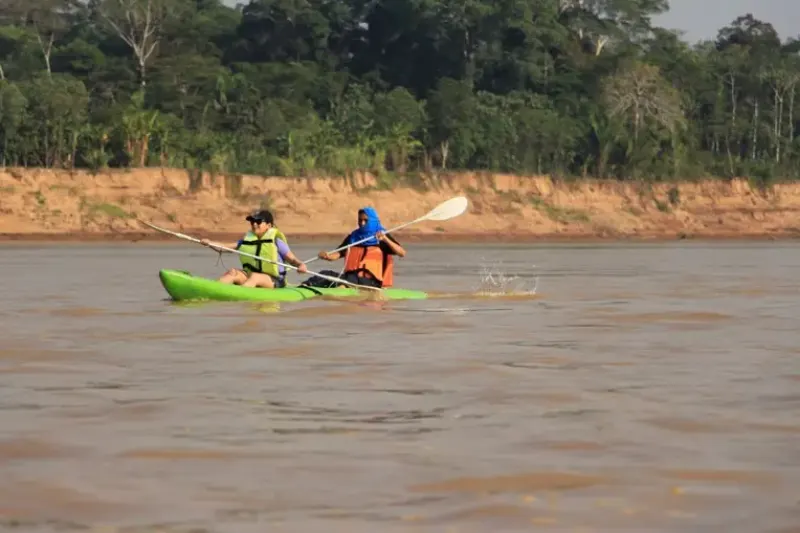
How to Beat the Humidity: The Essential Packing List for Jungle Paddlers
Stepping into the rainforest feels like wearing a warm blanket. Cotton absorbs sweat like a sponge, staying heavy and damp for days. Moisture-wicking synthetics pull moisture away from skin and allow it to evaporate quickly even at 90% humidity. That difference matters a lot by hour three on the water.
Sun glare off the water is surprisingly intense. Three-point sun protection strategy covers it: wide-brimmed hat, UPF-rated sleeves, and polarized sunglasses. Silt-heavy river acts like a brown mirror, polarized lenses filter out blinding surface reflections and reveal turtles and caimans swimming just below the muddy surface. Not a fashion choice, a vision tool. Reviewing packing essentials for Tambopata before departure removes a whole layer of stress once the jungle heat actually hits.
Packing light keeps the kayak balanced and nimble on a kayak in Tambopata River expedition. Essentials only dry bag checklist:
- Mineral sunscreen.
- DEET-based insect repellent.
- Reusable water bottle.
The Calendar of the Rainforest: When to Time Your Paddling Expedition
Wet and dry seasons dictate entirely different perspectives when you kayak in Tambopata River currents. Understanding the best times to visit Tambopata matters more than most travelers realize before booking. May through October, dry season, shrinking waters expose muddy riverbanks where jaguars and capybaras gather to drink, best window for clear wildlife visibility. Wet season floods lift the boat several meters higher, bringing it thrillingly close to monkeys rustling in the lower canopy.
Beyond rainfall, a weather event called a Friaje occasionally sweeps through between May and August. Sudden Antarctic cold front, brief chill, refreshing relief from the heat. Cold-blooded reptiles hide to stay warm during a Friaje while colorful birds become highly active, morning paddle turning into an unforgettable avian showcase without any extra effort.
Understanding how to kayak with the seasons rather than against them separates a forgettable trip from a genuinely memorable one. Selecting the right window is the foundation of rewarding eco-friendly tourism in Puerto Maldonado.
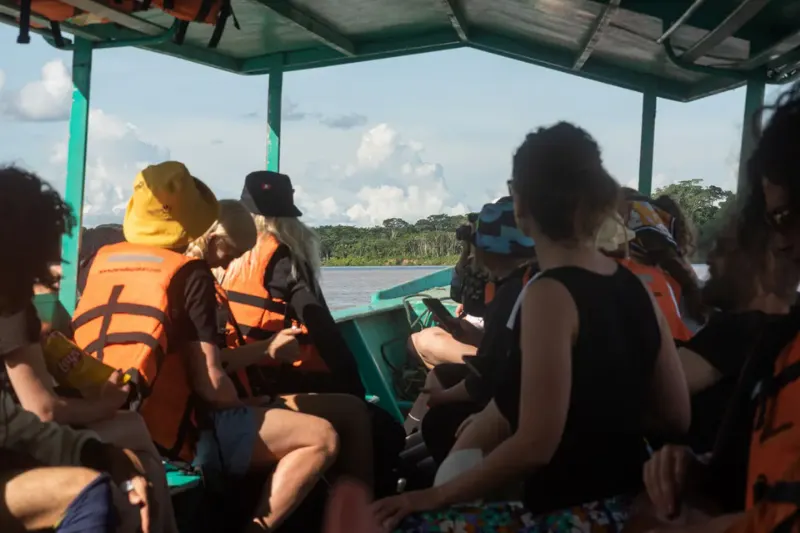
Your 48-Hour Transition: From Puerto Maldonado to the Quiet Tributaries
Viewing the Amazon doesn’t have to happen from behind a screen. Transition from airport to water starts with selecting a lodge that champions low-impact exploration over noisy motorboats. Accommodations offering guided wildlife tours in Madre de Dios that prioritize paddle-craft are the right ones. Verify essential safety gear is provided before booking, mental checklist complete. Adventure tours in Tambopata built around quiet paddling, canopy walks, and night hikes cover more genuine jungle ground than any package built around motorized transport.
Between sessions on the water, the best local eats in Tambopata deserve attention too. Puerto Maldonado’s market stalls and riverside restaurants serve fresh river fish, juane rice wrapped in bijao leaves, and thick Brazil nut soups that taste nothing like anything available outside the region. Worth building time into the itinerary rather than defaulting to lodge food every meal.
Tambopata Tours built around quiet paddling transform the fundamental relationship with the rainforest. No longer a spectator on a roaring engine, a silent observer riding the current instead. Drifting past sunbathing caimans, birdwatching from a canoe, experiencing the ecosystem at its most authentic. The kayak river adventure in Tambopata turns an intimidating wilderness into a welcoming quiet trail waiting for the next paddle stroke.

