The black-headed night monkey in Tambopata is one of the Amazon’s most memorable after-dark sightings: a small, wide-eyed primate that moves quietly through the canopy while much of the forest wakes up for the night. Seeing one takes patience, a good guide, and the right kind of rainforest habitat, but nobody needs to be a primate expert to enjoy the search. This guide explains where to look, how night walks work, and what to expect when setting out to spot this elusive nocturnal animal.
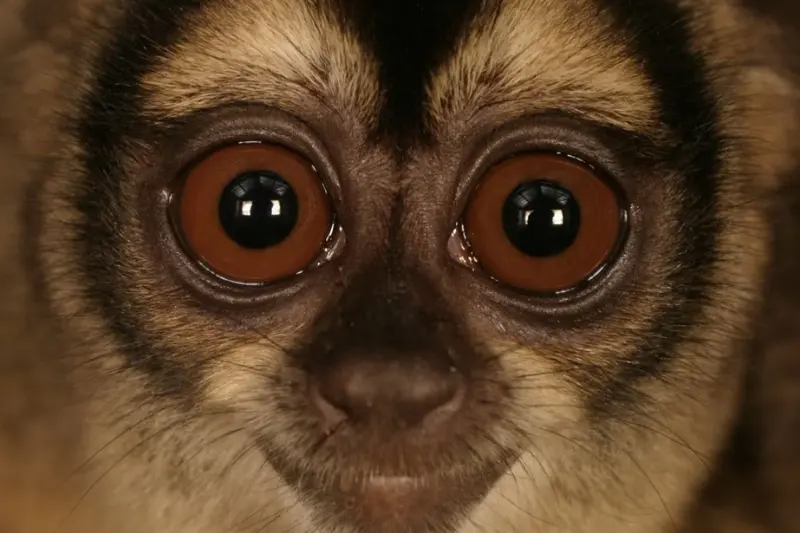
Where can you see a black-headed night monkey in Tambopata?
The best chance of seeing a black headed night monkey comes in forested areas around Tambopata’s lodges, trails, and river corridors, especially when joining a guided night walk rather than searching alone. Tambopata is part of the broader range of Aotus nigriceps, a South American night monkey found in Peru, Bolivia, and Brazil, with distribution records extending through parts of the western and southern Amazon.
In practical travel terms, look for lodges that offer structured nocturnal walks or primate-focused rainforest activities. Rainforest Expeditions, for example, operates three ecolodges in the Tambopata National Reserve area and lists jungle night walks at Posada Amazonas, Refugio Amazonas, and Tambopata Research Center. These guided outings prove useful because night monkeys are quiet, arboreal, and easy to miss without trained eyes.
The night forest is the real attraction
A night monkey may be the goal, but the experience runs bigger than one species. Once the sun drops, Tambopata feels like a different rainforest. Frogs call from wet leaves, insects flash or hum in the understory, and guides scan tree holes, vines, and branches for eyeshine. This broader after-dark ecosystem is explored in more depth in Night Wildlife in the Amazon of Tambopata.
Black-headed night monkeys belong to a wider cast of nocturnal animals that can include tree frogs, tarantulas, sleeping birds, insects, caimans near water, and other mammals depending on the trail and conditions. Rainforest Expeditions describes its jungle night walk as a chance to see the Amazon’s nocturnal wonders, typically lasting about one hour. That shorter duration can suit travelers who want a focused wildlife activity without an exhausting late-night trek.
How do you improve your chances of spotting one?
Joining a guided walk, moving slowly, staying quiet, and understanding that wildlife sightings are never guaranteed all improve the odds. A night monkey is not an animal people usually “chase”; it is one noticed by listening, scanning patiently, and letting the forest reveal itself. Timing also plays a role, and checking Best Times to Visit Tambopata beforehand can help set realistic expectations for the trip.
Use this simple checklist before and during your outing:
- Choose a lodge with night activities. Ask whether guided night walks are included or available, and whether night monkeys are seen in the surrounding forest.
- Go with a local naturalist guide. Guides know sleeping trees, fruiting areas, trail conditions, and safe observation practices.
- Wear dark, quiet clothing. Lightweight long sleeves and long pants help with insects and reduce distraction.
- Bring a headlamp, but use it carefully. Follow your guide’s instructions so lights do not disturb wildlife or other guests.
- Keep voices low. Night monkeys rely on the canopy and shadows; loud groups reduce the chance of close observation.
- Look up often. Many first-time visitors scan the trail and miss movement above them.
- Accept uncertainty. The Amazon is not a zoo. The surprise is part of the reward.
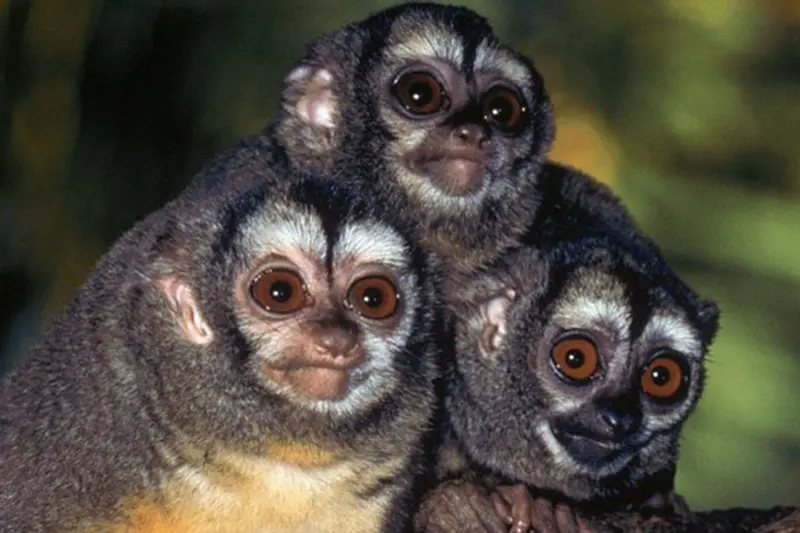
If a guide or traveler mentions “black headed monkey,” they may be referring informally to the black-headed night monkey. Clarifying this helps, because Tambopata is also home to several other monkey species, many of which are active by day rather than night, alongside the wider group profiled in Top Animals You’ll Find in the Tambopata Amazon Rainforest.
What a night monkey sighting feels like
A good sighting is often brief and subtle. Two bright reflections may appear first in the beam of a light, then a rounded face partly hidden by leaves. The animal may freeze, shift along a branch, or disappear into thicker canopy without drama.
That quietness is exactly what makes the moment special. Unlike the noisy movement of some daytime monkeys, a night monkey often feels like a secret of the forest. Its large eyes, compact body, and cautious movements suit an animal adapted to low light and canopy travel.
Photos shouldn’t become the only focus. Low light, distance, and branches can make photography difficult, and flash use may be restricted by responsible guides. A better goal centers on observing behavior: whether the monkey is alone or with another individual, how it moves, what height it uses, and how it reacts to sound and light. Researchers documenting similar elusive behavior often rely on Camera Trapping in Tambopata National Reserve, which captures moments a guided walk alone would likely miss.
Responsible viewing protects the experience
Wildlife tourism works best when animals remain wild. For a black-headed night monkey, that means no feeding, no calling, no shaking branches, and no pressure on guides to force a sighting. The most respectful encounters stay quiet, short, and controlled.
Responsible viewing also keeps the experience better for future travelers. If monkeys learn to avoid certain trails because groups are too loud or lights are too intense, sightings become less natural and less likely. Following the guide’s distance rules, staying on marked trails, and letting the animal choose whether to stay visible all make a difference.
A few good habits make a real difference:
- Use red or dim light when recommended. Softer light can reduce stress and preserve your night vision.
- Do not surround the animal. Stay with the group and leave a clear escape route.
- Skip playback or imitation calls. Artificial sounds can disrupt natural behavior.
- Limit photo time. Take a few careful shots if allowed, then simply watch.
- Share the sighting calmly. Let everyone look without crowding or rushing.
Other Tambopata wildlife to enjoy after dark
Even if the black headed night monkey does not appear, a night walk in Tambopata rarely feels empty. The forest floor and understory stay alive with small, fascinating details that are easy to overlook during the day, some of it hiding among the vegetation covered in A Guide to the Incredible Plant Species of Tambopata Rainforest. Guides may point out camouflaged insects, spiders waiting near burrows, amphibians on leaves, or the reflective eyes of animals near streams.
This is why treating the night monkey as a highlight rather than the only measure of success helps. The same patience that helps travelers find primates also helps them appreciate the entire nocturnal ecosystem, one that includes several species detailed in Rare Animals of the Amazon Tambopata Wildlife Guide. In many ways, the search teaches how to see the rainforest properly: slowly, quietly, and with attention to layers.
Planning your Tambopata night walk
For most travelers, the simplest plan involves staying at a Tambopata lodge that includes guided excursions and asking about night walks before booking. Spending more than one night in the rainforest is worth considering if wildlife is a priority. More time gives more chances, and it also allows experiencing different conditions after rain, on clearer nights, or along different trails, patterns shaped by the region’s weather as described in Amazonian Rain, River, and Forest: Climate of Tambopata.
Packing light but thoughtfully pays off. A small daypack, insect repellent, breathable rain protection, and comfortable closed-toe shoes prove more useful than bulky gear, and a full rundown of essentials appears in What to Pack for Tambopata. Binoculars that perform well in low light help too, but a guide’s knowledge remains the most important tool.
A quiet reward for patient travelers
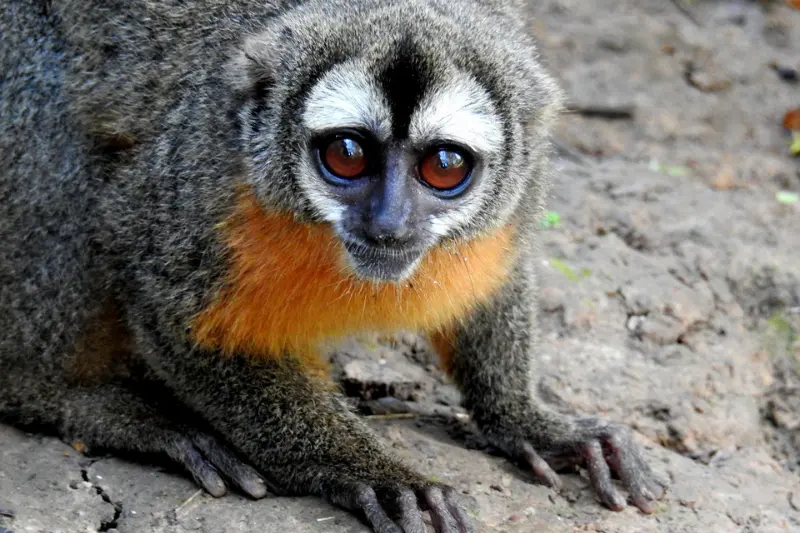
Seeing a black-headed night monkey in Tambopata is not about speed, noise, or luck alone. It comes down to entering the forest on its terms, trusting a knowledgeable guide, and paying attention when the canopy starts to move. Whether the outcome brings a clear view or only a brief flash of eyeshine, the search reveals a side of the Amazon that daytime walks cannot show.
For anyone with nocturnal animals high on their Tambopata wish list, a guided night walk deserves a place in the itinerary. Realistic expectations, genuine curiosity, and patience let the forest do the rest.