Let’s clear something up right away: “Amazon tarantula” isn’t one single spider with a name tag. It’s more like saying “Amazon parrot.” You’re talking about a whole crowd of species—some huge, some small-ish, some that live on the forest floor, and others that basically treat the canopy like their apartment complex.
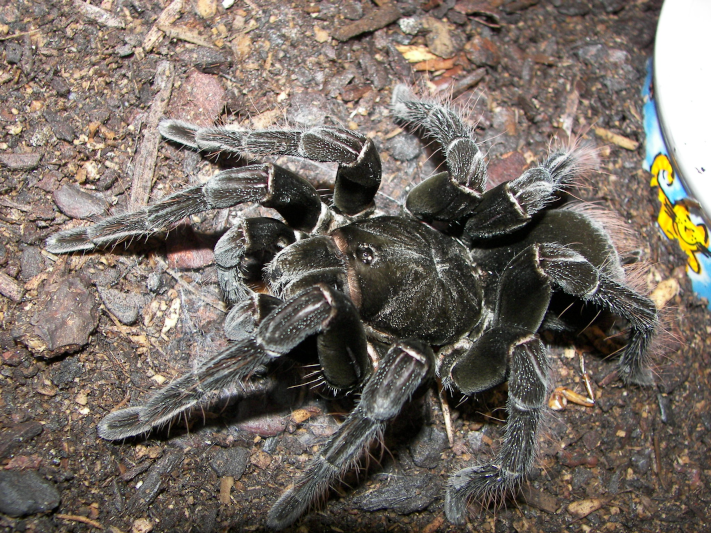
And yes, they look intense. Hairy legs, big fangs, the whole vibe. But most of the time, tarantulas in the Amazon are not hunting people. They’re managing their own messy little survival project in a rainforest where everything eats everything. Honestly, if you were eight-legged and surrounded by birds, frogs, snakes, and hungry wasps, you’d keep a low profile too.
A quick “where would I even find one?” moment
When people picture a tarantula habitat, they often imagine a web in a corner. The Amazon laughs at that. A lot of these spiders don’t build big capture webs at all—they build homes. Burrows, silk retreats, hidden tubes in bark. Think shelter first, food second.
The rainforest in itself is a vertical organizational chart with first the ground floor (leaf litter), which is frequently damp, followed by a mid-level (shrubs and trunks) and the top level: the canopy (bright, breezy and busy). Each species of tarantula is assigned to a specific “department” and this influences their movements, the way they hunt for food, and how they survive.
The heavyweight: the “Goliat Tarantula” (aka the Goliath birdeater)
In qui’s keyword list there is a reference to Goliat Tarantula, so one is sure to orbit the legendary giant, the Goliath birdeater (Theraphosa blondi).It’s often described as the heaviest spider on Earth. And the first time you see photos, your brain does that little error message thing—that’s a spider?
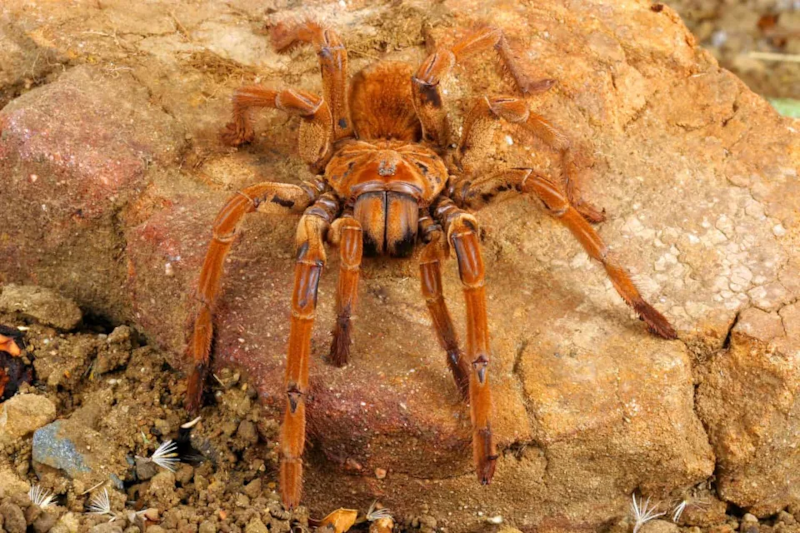
It doesn’t catch birds by the tail for a day about – as the title suggests. However, this tale has been memorable because it’s dramatic, not because it’s frequently heard. Most meals are more practical: the insects and other invertebrates (occasionally even a small vertebrate such as a frog or a lizard) as a matter of chance. Opportunistic. Efficient. Very “take the ticket that’s in front of you.”
Its main move is staying grounded. A Goliath tarantula is usually a burrow spider—meaning it uses the soil like a bunker. The burrow gets lined with silk (not for trapping prey, more for structure and stability). It is essentially an armored corridor covered with leaf debris. That is the kind of micro habitat you’d be looking for: damp ground, genus of rich leaf litter, when it’s somewhat hidden.
And here’s a mild contradiction that’s true: it’s “scary” and also pretty timid. Big animals can afford to be cautious. A lot of their behavior is about reducing risk, not picking fights.
Up in the trees: the pink-toed crowd and canopy living
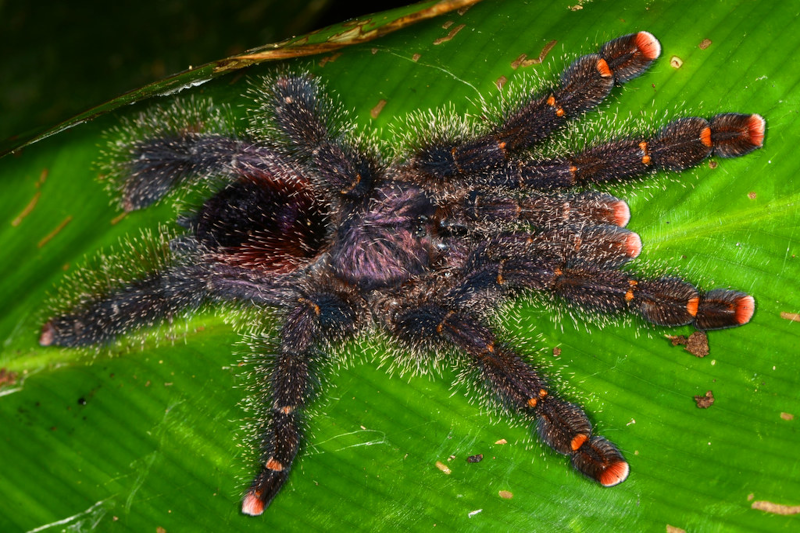
Turn your focus upstairs; particularly in think of locales like Tambopata within the jungles of Peru, exactly as the jungle seems to build up layers nearly endless. There are different species of tarantula that live below the ground in trees, called ‘arboreal’ or tree-dwelling tarantulas. One of the more common species of tarantula is the pink toe species, Avicularia avicularia, identified by small pinkish ‘tips’ that resemble tiny socks.
Tree life demands different “hardware.” Lighter build. More agility. Better grip. They use silk to make retreats—little hideouts tucked in leaves, crevices, or rolled bark. Not a sticky trap. More like a sleeping bag with good weather resistance.
People who keep pink toes as pets learn a lesson that sounds almost boring, but it matters: airflow. In husbandry terms, you’ll hear “cross-ventilation.” In layman’s terms, it means that the enclosure should be slowly air moving. Either too stuffy and mold comes into your living areas, or the space is too dry and you begin to feel like you have to complete a Humphrey
So… are tarantulas poisonous? (And why people argue about that)
Enter a vocabulary conundrum: everyday terms and biologic terms don’t always graph along the same time scale! The question “Are tarantulas poisonous?” is likely to be phrased as “Will it hurt me?”.
Technically, most tarantulas are venomous, not poisonous. Venom is injected (fangs). Poison is absorbed (eating, touching). For most Amazon tarantula species, the venom isn’t considered medically significant to healthy adults. This doesn’t necessarily mean it’s comfortable. It simply indicates that you’re not experiencing the type of venom that is going to cause serious effects.
The problem being, there are different types of pain and panic and at the moment they feel very similar. But it is important to have a good basic understanding of potential risks and to keep it relatively simple and quiet. What’s the likely outcome? Local pain, swelling, maybe nausea from stress. The bigger issue for many people is irritation from urticating hairs (more on that in a second), or an allergic reaction—rare, but always possible with bites or stings of any kind.
Do tarantulas bite? Yes. Do they want to? Usually no.
Do tarantulas bite? They can. They have fangs, and they’re not decorative. But biting tends to be the last step, not the first. Most of the time, a tarantula’s “playbook” looks like this:
- Retreat (the favorite option)
- Threat posture (the dramatic warning)
- Defense (kicking hairs for many New World species)
- Bite (if cornered and out of options)
Here those bristles are right big in the Americas. The spider has tiny barbed hairs on its abdomen. It can cause itching and burning of the skin, and is particularly unpleasant when in the eye. Don’t forget past times when you’ve been handling insulation without your gloves on, then regretted it.
So yes—watching a tarantula is a great experience. Handling one in the wild is a bad plan. Not because it’s a monster, but because it’s a fragile animal with effective defenses and no interest in being your photo prop.
The awkward magic trick: molting
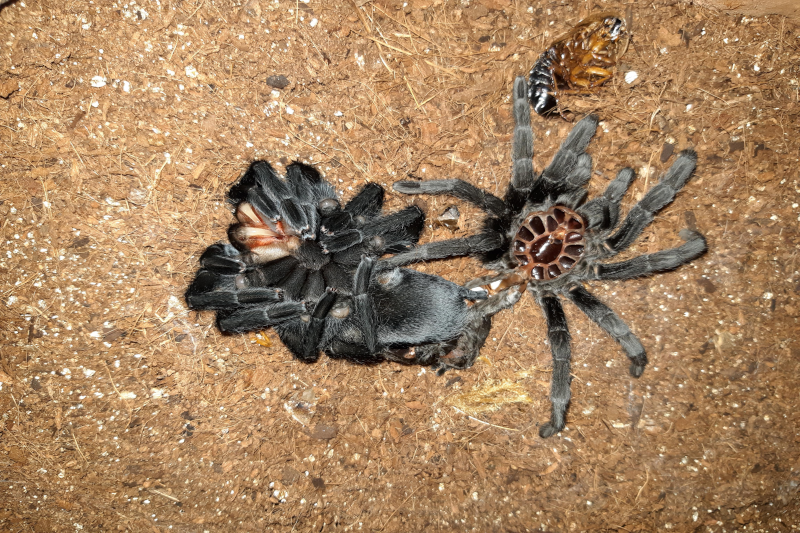
Tarantulas grow by molting. Their outer body is a hard shell (an exoskeleton), and it doesn’t stretch. So, every so often, they have to shed it and “step out” into a new one. It’s as exhausting as it sounds.
Right before a molt, you might notice they stop eating, move less, and look a little dull. People sometimes misread that as sickness. Sometimes it is—but often it’s just molt prep. Many tarantulas also flip onto their backs when molting, and may seem to be a catastrophe, but if you know the script. Then slowly they come back free, legs first like an escape from skinny jeans without for instance ripping any skin. They then become soft and vulnerable until they become hardened by the new exoskeleton.
This is also where the Amazon setting matters. Warmth and humidity help the process. Too dry and things can go wrong. Nature isn’t sentimental about it.
Why they matter (even if you’d rather not think about spiders)
Tarantulas aren’t just “big spiders.” They’re part of Amazon’s pest-control team. In ecosystem terms, they’re predators that keep certain insect populations from spiking. That’s not a small thing in a place where bugs can explode in number after rains.
However, they are also consumed by other animals as well. Birds, reptiles, mammals and, most of all, the dreaded tarantula hawk wasps (Pepsis) eat them. The story of the tarantula hawk is one that’s been thought to be impossible by many who have seen a nature documentary and wonder, that can’t be true! The wasp’s strategy is brutal. The tarantula’s strategy is: avoid the wasp at all costs.
And there’s another thread here that travelers care about: tarantulas can act like unofficial “forest health” hints. Not a perfect metric—nothing is—but seeing a variety of predators often suggests the food web is doing okay. It’s a bit like a dashboard indicator. Not the whole story, but still useful.
A quick tangent: edible tarantula Amazon stories
There is some practice in the Amazon that involves eating tarantulas, particularly in the Peruvian Amazon. Tarantulas can be served as food in certain communities—which may include roasting them. If you’re travelling there, and you want to know, ask, as you would any other source of food in context – ask questions, seek out good guides, and don’t do it as some kind of act.
However, food is so much more than nutrition. Culture, history and practicality – particularly in remote areas. However, if your tummy is giving you a ‘no’ sign that’s one to pay attention to. That isn’t disrespect, it’s being self-aware.
Bringing it together: fear, fascination, and a little respect
If you started this article thinking “tarantulas are nightmare fuel,” you’re not alone. A lot of us learned spider fear early, from jokes, jump scares, or one bad bathroom encounter. But Amazon tarantulas are better understood as highly specialized animals with clear boundaries.
So the next time you’re in a place like Tambopata—flashlight in hand, hearing frogs and insects doing their nighttime chorus—remember this: a tarantula sighting isn’t a threat. It’s a sign you’re seeing the rainforest as it really is. Busy. Competitive. Beautiful in a slightly chaotic way.
FAQ: Amazon Tarantulas and Human Safety
Are tarantulas poisonous?
They are not ‘poisonous’ but rather venomous worms. The majority of Amazon tarantula venom does not present a medical threat to healthy adults, but can still sting and cause swelling.
Do tarantulas bite?
While they may do this, they typically seek to avoid it. Many New World tarantulas kick urticating hairs, and many retract, and display warning postures, prior to biting.
Are tarantulas in the Amazon dangerous to humans?
Not necessarily life-threatening but can cause itching, swelling and pain, particularly from urticating hairs. Although rare, allergic reactions will occur.
What should you do if a tarantula bites you?
Rinse off with soap and water, use an ice pack and observe the symptoms. Seek immediate medical attention if breathing becomes difficult, many hives, large swelling, and if symptoms continue to get worse.
What’s the bigger risk: venom or hairs?
Many individuals find the hairs. It may cause skin irritation if it comes in contact with skin and both the eyes and skin may be harmed if it gets into the eyes. Therefore it is best to “look, don’t touch.”

