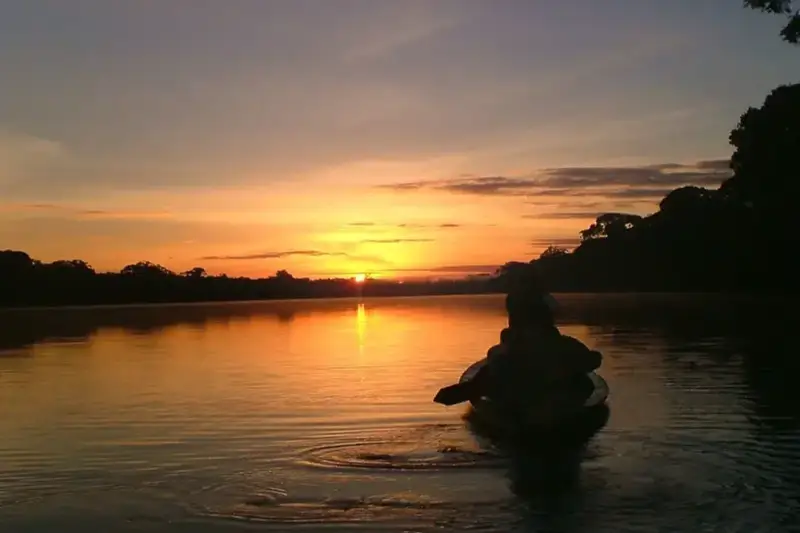
Six in the evening in the Amazon and the forest does not dim gradually. It switches. Macaws go silent, something low and rhythmic rises from the ground, and the entire atmosphere changes within minutes. A night jungle tour amazon travelers book expecting one thing and experience something completely different from the daytime version of the same trail.
The technical term for what happens is niche partitioning. Nocturnal animals use the same resources their daytime counterparts just finished with. The ecosystem runs shifts, essentially, and the temperature drop is the signal that the next crew is on. Some lodges sit within the Cultural Zone of Tambopata, where local communities have managed land use alongside conservation efforts for decades.
Why Cotton Is Your Enemy and High-Lumen Headlamps Are Your Best Friends
Humidity above 90% means cotton becomes a problem almost immediately. It absorbs sweat and holds it against skin, and every time movement stops the cold damp feeling sets in fast. Synthetic moisture-wicking fabric pulls moisture outward instead of holding it in. That single choice affects the entire night.
The red-light setting on a headlamp matters more than raw brightness. Human eyes build up rhodopsin over 20 to 30 minutes to see in darkness. One burst of white light destroys that buildup and resets everything back to zero. Red light lets the eyes stay adapted while still making it possible to check gear or read a map.
Clothing as a sealed system solves most insect problems before they start. Pants tucked into boots closes the main entry point. Before heading out on a night jungle tour amazon visitors should have these covered:
- Headlamp with red-light mode: Night vision stays intact between sightings.
- Moisture-wicking long sleeves: Insect barrier without overheating.
- Rubber boots: Mud, ground hazards, and everything that lives in both.
- DEET or Picaridin repellent: Applied to fabric cuffs where coverage lasts longest.
Spotting the ‘Diamond Glint’: How to Find Hidden Predators in the Undergrowth
Hip-level flashlight technique produces almost nothing useful. The torch needs to sit against the temple, aligned with the line of sight, so light bouncing off a retina travels straight back to the observer. That angle change turns a wall of dark vegetation into scattered points of reflected light. Animals that were invisible become findable.
The reflection comes from the tapetum lucidum, a mirror layer behind the retina that nocturnal animals use to double their available light. Color varies by species. Caimans run deep red. Moths and small mammals tend toward amber. Wolf spiders produce thousands of tiny blue-white pinpoints across the entire forest floor.
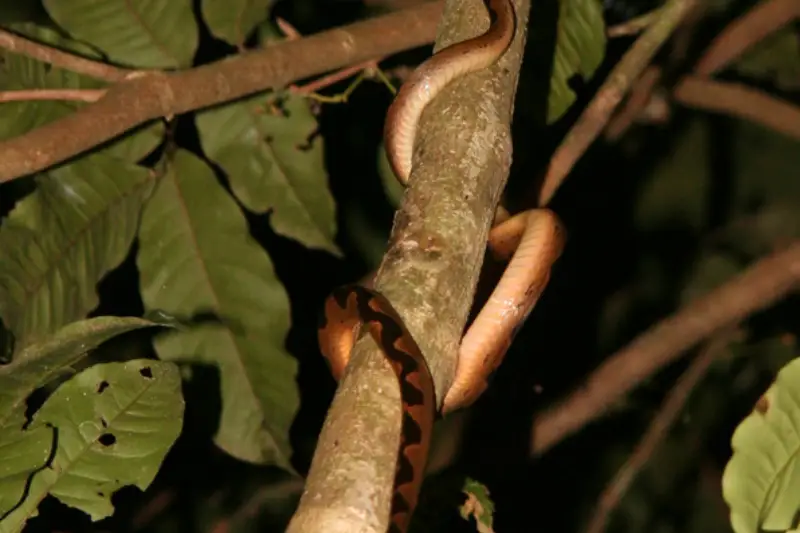
Snakes are among the most common eye-shine sources along the trail edges, particularly tree boas and the various pit vipers that hunt at ground level after dark. Telling spider reflections apart from raindrops takes a few minutes and then clicks into place. Once it does, the ground stops looking empty and that shift in perception is something guides on a night jungle tour amazon use to gauge how well a group is reading what is around them.
From Bioluminescent Fungi to Velvet Spiders: The Macro Magic of the Forest Floor
Lights off for sixty seconds reveals something the headlamp masks completely. Decaying wood glows faint green from bioluminescent fungi scattered across the forest floor. The effect is called foxfire. It takes a moment for the eyes to register it and then it is hard to stop looking.
When lights come back on the focus shifts to animals that survive by resembling something else entirely. Katydids built to look like dead leaves. Stick insects that freeze perfectly still under a beam. Wandering spiders covering ground without any web to anchor them. Rare animals like the giant armadillo occasionally cross these trails after midnight, though sightings are unpredictable and guides are careful not to overpromise.
Photography here works better with a raised ISO and a macro focus than with flash. Flash flattens natural color and startles the animal. Slow movement and patience produce better images than speed.
Caiman Spotting and Canoe Expeditions: Navigating the Blackwater Mirror
Canoe at night means the canopy opens and the sky reflects flat on black water. The guide’s spotlight starts moving across the riverbank and the first red points of light appear hovering just above the waterline. That is where the river portion of a night jungle tour amazon travelers remember clearly begins to get interesting.
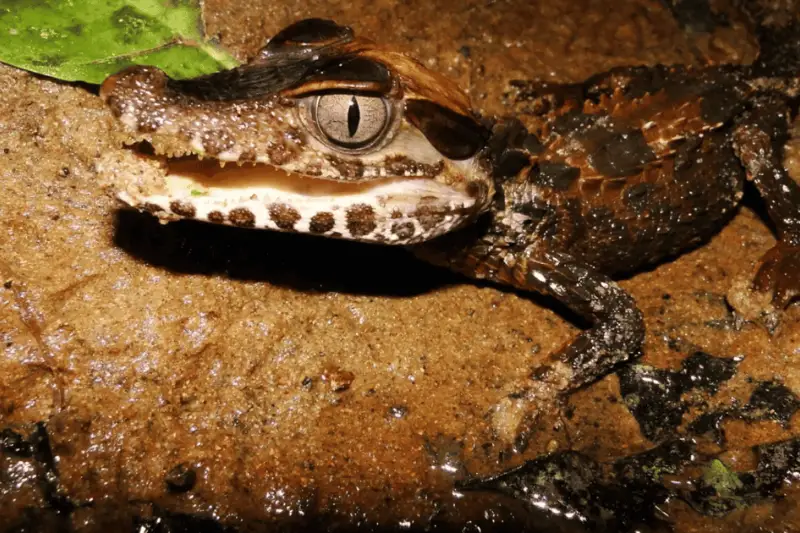
Spectacled caimans move away from light quickly. Widely spaced reddish eyes sitting low and completely still usually mean a black caiman, the largest predator in the basin. Eye spacing gives a rough size estimate before any other detail becomes visible.
Hummingbirds are a daytime presence along these same river edges, feeding at flowering vines that hang over the water. After dark those same branches belong to tree boas coiling above the surface waiting for frogs or sleeping birds to pass underneath. The river pulls prey animals in to drink and everything that hunts them follows.
Iquitos vs. Tambopata: Choosing Your Ideal Nocturnal Biodiversity Hub
Where a night jungle tour amazon takes place determines which animals are realistically possible to see. Northern flooded forest and southern dry upland terrain are genuinely different environments with different cast lists. The tambopata vs manu debate comes up frequently among travelers planning longer stays, since Manu offers deeper wilderness access while Tambopata has better lodge infrastructure and shorter travel times from Cusco.
Three main options in practical terms:
- Iquitos, northern Peru: Flooded forest, strong amphibian numbers, glass frogs, tree frogs, aquatic reptiles throughout.
- Tambopata, southern Peru: Dry trails, better odds for tapirs, ocelots, armadillos on solid ground.
- Manaus, Brazil: Goliath bird-eating spiders, distinct insect diversity across central Amazon terrain.
Lodges operating inside the Reserved Zone have stricter protocols around group sizes, lighting, and trail access than those closer to town. That extra regulation translates directly into better wildlife encounters because the animals in those areas have had less human contact.
The Ethics of the Dark: How to Observe Without Disturbing
A camera flash aimed directly at a nocturnal predator can disrupt its ability to hunt for up to 20 minutes. Eyes calibrated for near-total darkness do not handle sudden intense light well. Red-filtered beams or angles slightly off-center allow observation without that interference. This applies to every person in the group simultaneously, not just whoever is holding a camera.
Wildlife protection in these areas depends on guides enforcing consistent behavior from every group that passes through. Six feet of distance between observer and animal prevents pathogen transmission to amphibians and avoids triggering a defensive response. Rigid freezing and rapid breathing are the clearest stress signals and when either appears the group moves back without waiting to be told.
A well-run night jungle tour amazon naturalists lead produces animals behaving normally rather than reacting to people. That difference between natural behavior and stress response is the whole point of managing distance and light carefully throughout the walk.
Your Amazonian After-Hours Action Plan: Turning Curiosity into a Reality
Some visitors combine a night jungle tour amazon with a ceremonial experience at a nearby community. Ayahuasca meaning varies across indigenous traditions but centers broadly on a plant-based ceremony used for healing and spiritual insight, something separate from the wildlife experience but often available through the same lodge networks in this region.
Dry season concentrates wildlife around water sources. Wet season pushes ground animals into trees and changes which canoe routes are accessible. Booking around dates without accounting for season means the specific animals on the target list may simply not be in accessible locations during that window.
Three things worth verifying before committing to any night jungle tour amazon operators list on their booking pages:
- Eco-certification confirming low-impact lighting is standard practice, not optional.
- Guide-to-guest ratio kept small enough that the guide can give attention to individuals on the trail.
- Equipment inclusion so boots and headlamps are not a last-minute scramble on arrival day.
The Amazon after dark is a functioning ecosystem running its night shift on a schedule that has nothing to do with human presence. Arriving prepared and staying observant is genuinely enough to see most of what it offers.

