Piranhas have a PR problem. Say “piranha amazon river” out loud and most people picture teeth, panic, and a movie scene that’s trying way too hard. But if you spend time around Madre de Dios—those warm, brown rivers feeding the lakes near Tambopata National Park—the story feels different. More grounded. More… normal. And honestly, that makes piranhas even more interesting.
This is a friendly, fact-first look at amazon piranha facts, the species you’re most likely to hear about, and what’s really happening when people whisper, “Are they dangerous?”
A quick map (so you know where we’re headed)
- The biggest myths—and what guides and biologists actually see
- Common Amazon piranha species (plus the classic “is that a piranha?” mix-up)
- What piranhas eat, and why that matters for the whole river system
- Why bites happen (rarely) and how to lower your risk profile
- What a piranha fishing tour near Tambopata is really like
Okay, about that “they’ll eat you” rumor…
Here’s the thing: most of the time, piranhas in Amazon waters are busy being fish. They’re not out there running a villain storyline. They’re reacting to food, noise, water level, and stress—like any wild animal.
Do feeding frenzies exist? Sure. But they’re not a daily event, and they’re not a human-targeting strategy. Think “messy group meal” when there’s easy protein around (often a dead animal or a struggling fish), not “organized attack.” The Hollywood version skips the context, because context isn’t scary enough.
Also, people forget this: the Amazon is crowded. It’s basically a living aquarium—thousands of amazon river fish species, plus caimans, river dolphins, and birds that look like they’ve been hired as security. Piranhas aren’t the boss of that system. They’re one part of it.
Meet the cast: not all piranhas act the same
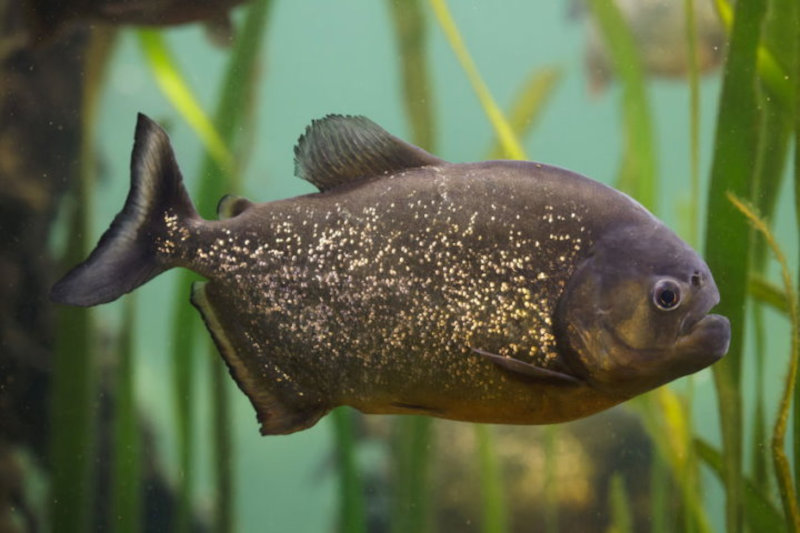
When someone says “piranha,” they usually mean a few well-known species in the family. But there are many kinds across the basin. Some are more predatory. Some are more scavenger-like. Some are… surprisingly chill.
The headline-makers: red-bellied piranhas
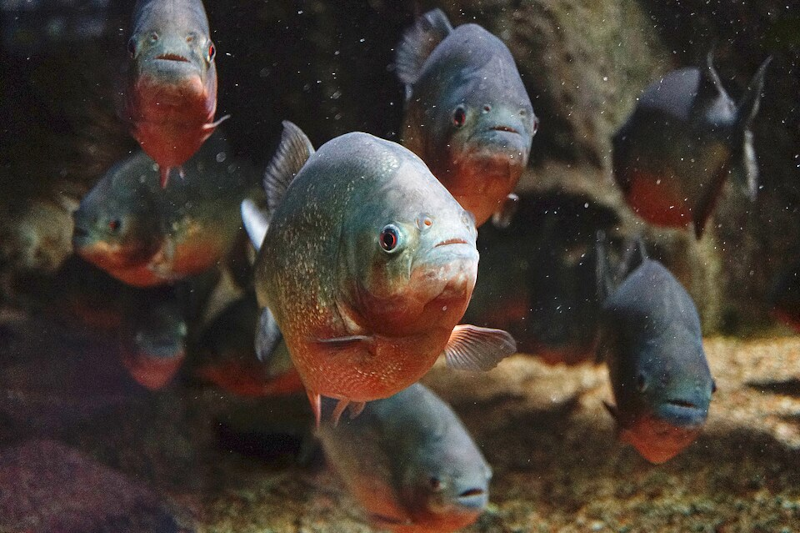
The red-bellied piranha (Pygocentrus nattereri) is the famous one. It often moves in groups, which looks dramatic. But groups can be a safety tactic too—like commuters on a crowded train. A school can reduce the chance that a bigger predator picks you off.
The loner with a serious bite: black piranhas
Black piranhas (often linked to Serrasalmus species, depending on the region) tend to be more solitary. They also get credit for a strong bite relative to body size. That’s real biology, not hype. Their teeth are built for shearing, like tiny pinking shears.
Plot twist: sometimes it’s not a piranha at all
If you’ve ever seen a fish with a chunky body and a “wait… are those human teeth?” vibe, you might be looking at a pacu, not a piranha. Pacus are relatives, and they can share the same waters. The quick rule of thumb: piranhas have sharper, triangular teeth; pacus have flatter teeth for crushing plant food. People mix them up all the time, especially on a busy piranha river day with lots of catches and quick photos.
So what do they eat—and why should you care?
Because diet explains behavior. And behavior explains risk.
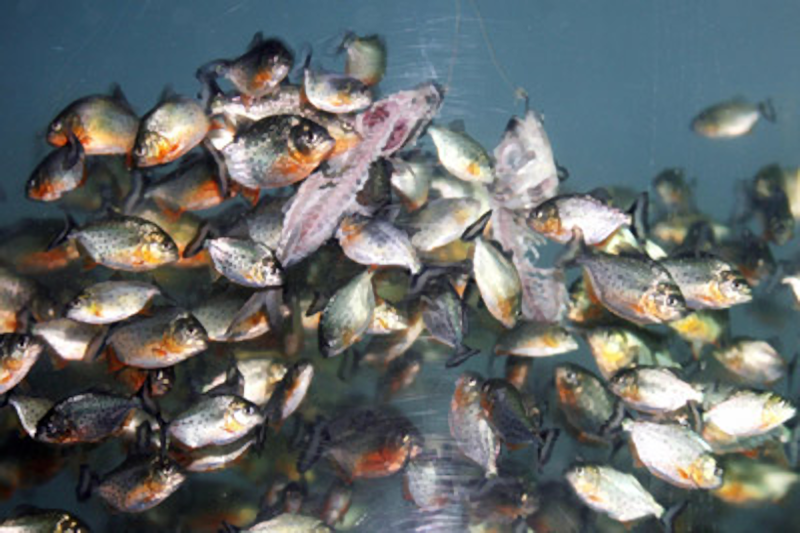
Piranhas are often described as carnivores, but “opportunistic feeder” is closer to the truth for many species. They’ll eat smaller fish, insects, bits of crustaceans, and carrion. They also nibble fins and scales sometimes (rude, yes, but it’s a survival move). In ecology terms, they provide ecosystem services—which sounds like a corporate slide deck, but it basically means they help clean up the river and recycle nutrients.
That cleanup role matters more than people think. In flood season, the forest becomes waterlogged and food is everywhere. In dry season-, habitats shrink, fish crowd together, and competition spikes. Same animal. Different conditions. Different mood. That’s not “evil”; it’s logistics.
When things go wrong (and why it’s usually predictable)
Most negative piranha stories share a few patterns:
- Low water, when fish are packed into warm, shallow areas
- Handling, especially removing hooks or holding a fish carelessly
- Food in the water, like bait scraps or cleaning fish near the shore
It’s a bit like workplace safety. The fish aren’t “out to get you.” But if you ignore the hazard points—sharp teeth, stressed animals, crowded water—you’re increasing your odds of an incident.
Madre de Dios and Tambopata: where visitors actually meet piranhas
If you’re traveling through Peru’s Madre de Dios region, you’ll hear about piranhas early. Guides mention them the way a project manager flags a known risk: “It’s part of the environment, and we manage it.” Many lodges near Tambopata National Park visit oxbow lakes and calm channels where piranhas are common.
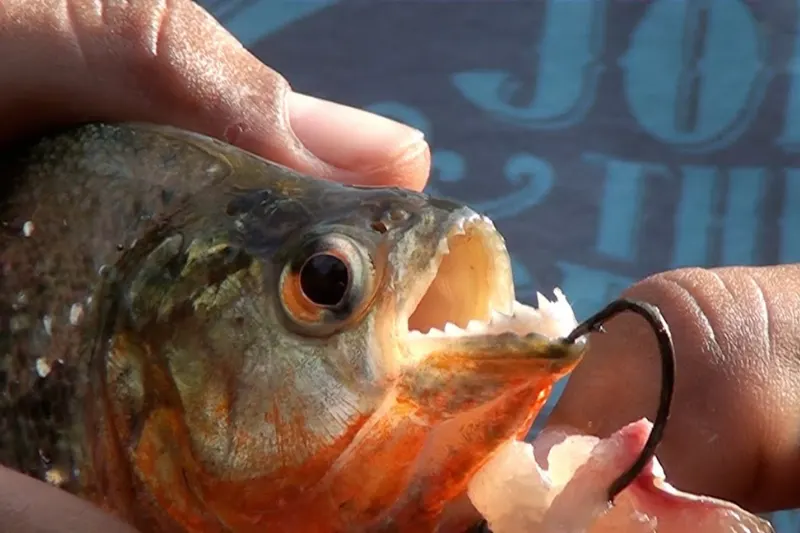
And yes, a guided piranha fishing tour is a real thing—and it’s usually more fun than scary. You sit in a canoe or small boat, the air feels heavy with humidity, and you wait. Sometimes you catch one fast. Sometimes you don’t. That’s fishing.
Here’s the small, practical advice that keeps the experience smooth: let the guide handle the unhooking, keep fingers away from the mouth (obvious, but people forget when the adrenaline hits), and don’t treat the fish like a prop. Quick photo. Respectful release. Everybody wins.
FAQs (because you’re not the only one wondering)
Can piranha fish eat humans?
They can bite, but they don’t “eat humans” as a normal behavior. Most cases involve handling fish, stepping into shallow areas during low-water season, or entering water where bait and scraps are present. In typical conditions, piranhas avoid big, unfamiliar animals—including us.
Where can you find piranha fish?
You can find piranha fish across much of northern and central South America, especially in the Amazon and Orinoco basins. In Peru, they’re common in Madre de Dios waterways, including lakes and slow-moving channels near Tambopata National Park. They also show up throughout the broader piranha amazon river network and connected tributaries.
What do piranhas eat in the Amazon rainforest?
What do piranhas eat in the Amazon rainforest? A mix: small fish, insects, crustaceans, and carrion are common. Many species act like nature’s cleanup crew when dead animals end up in the water. Seasonal shifts matter too—when water is low and food is tight, feeding can look more aggressive.
Are piranhas the most dangerous amazon river fish?
Not usually. They get the fame, but other animals (including caimans) can pose a bigger threat in the wrong situation. Piranhas are more likely to be a “sharp-teeth handling” issue than a swimmer-stalking problem.
Is a piranha fishing tour safe?
With trained local guides, yes. Guides choose spots, timing, and gear that keep things controlled, and they’ll coach you through handling rules. If you’re cautious and follow instructions, it’s a low-drama way to see a famous fish up close.
So what’s the real takeaway?
The reality is less cinematic and more fascinating: piranhas are part of a working system. They’re predators sometimes, scavengers often, and stress-reactive when conditions get rough. If you’re planning a trip to Madre de Dios, it’s smart to respect them—like you’d respect any wild animal with sharp equipment attached.
And if you catch yourself feeling nervous, ask a simple question: “What’s the context here?” Most of the time, the context is the whole story.